 AI-First Culture
Scaling Sales Intelligence: Enterprise AI Rollout and Change Management
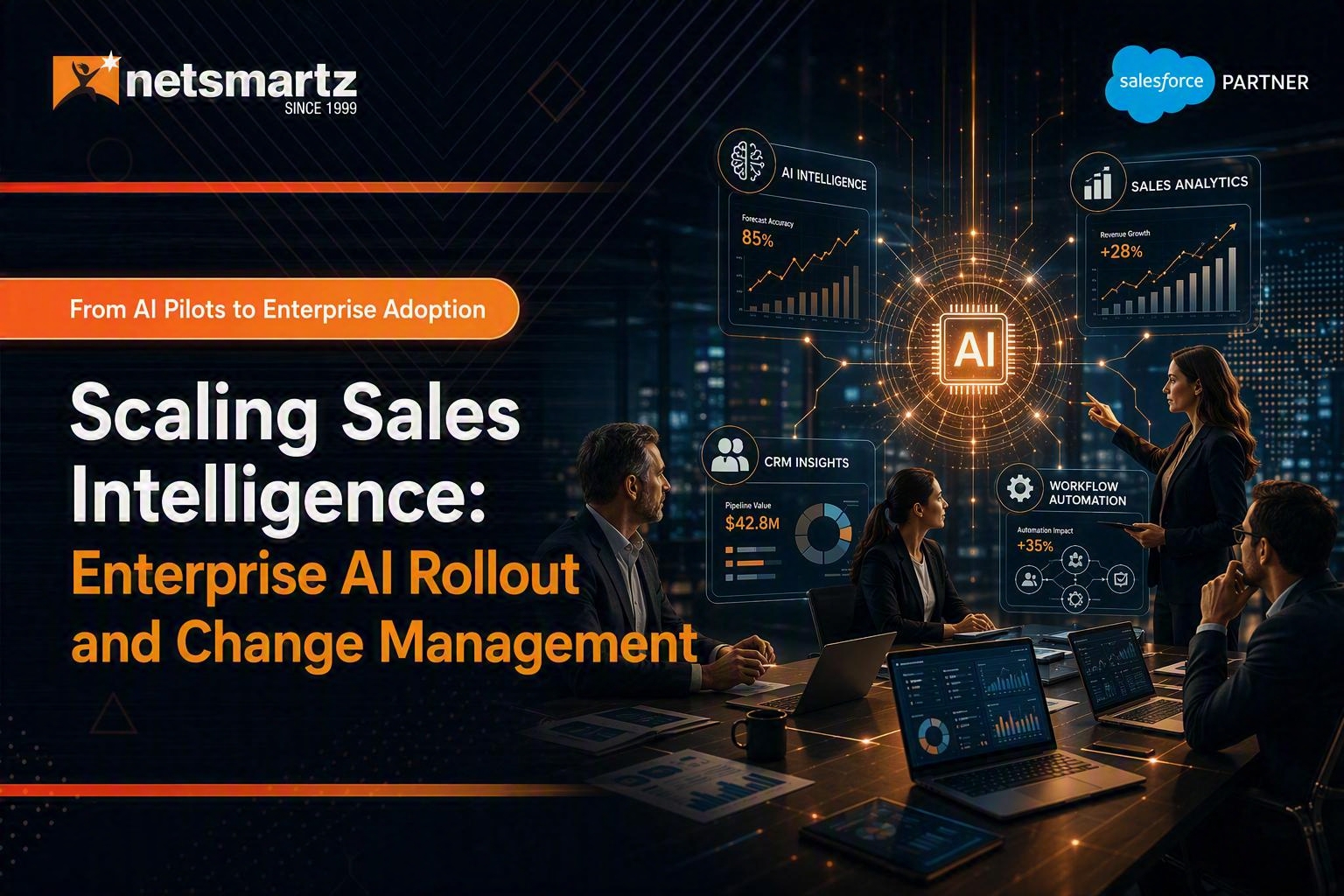
"AI doesn't fail because people resist change. It fails when organizations expect new technology to work inside old workflows."
In 2026, the implementation of AI technology has been the measure against which every technology manager is assessed. It’s not about whether the management has approved AI’s implementation budget; it is about whether AI is part of the daily workflow or not. The gap between approval and real use of AI is the sticking point for most AI investments, and this is what the article is centered on.
Why Enterprise AI Implementation Keeps Stalling
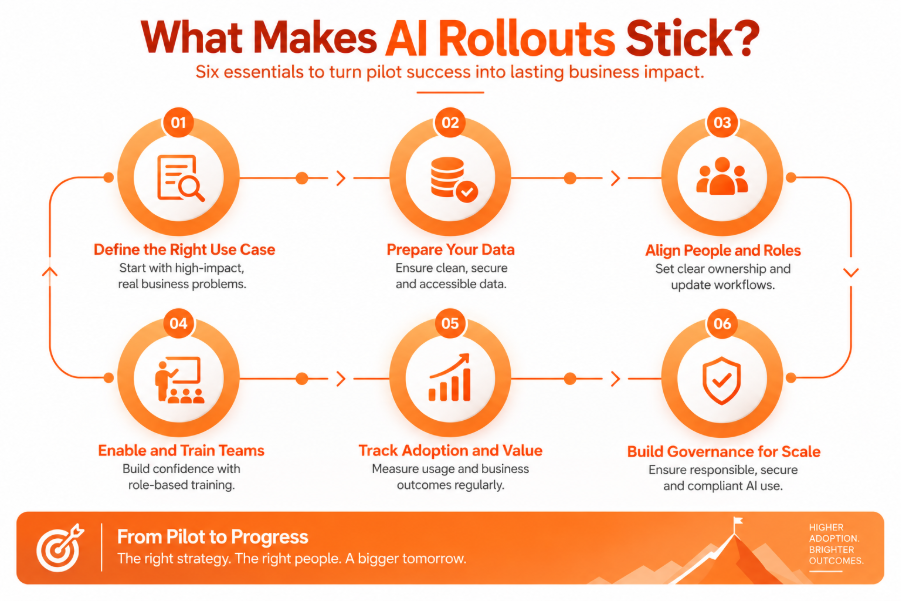
The adoption numbers look strong at first glance. According to McKinsey's State of AI research, most organizations now use AI in at least one business function. Look past that headline, though, and things get more honest: fewer than 10 percent have scaled AI agents beyond a pilot.
Gartner points to the same gap from a different angle. A large share of AI projects stall simply because the underlying data was never made ready for it. Agentic AI projects carry an added risk on top of that: unclear business value and inadequate risk controls are pushing a meaningful share of them toward cancellation before they ever reach real scale.
Put these together and a consistent pattern shows up. The technology mostly works. What breaks is everything around it: the data feeding it, the workflows it sits inside, and the people expected to work differently tomorrow than they did yesterday.
The Real Bottleneck Isn't the Technology
This is the part that gets underestimated most in sales and service organizations, because a new AI agent or copilot usually gets treated as a tooling rollout instead of a workforce change. According to a Gartner survey of CHROs, 78 percent agree that workflows and roles will need to change meaningfully to get real value out of AI investments. That statistic alone says most of the actual implementation work happens after the software goes live, not before it.
McKinsey's research backs this up from a different angle: workflow redesign, not model selection or tool choice, is the factor most closely tied to measurable AI ROI. Organizations see bottom-line impact when AI gets built directly into how a process runs, not when it sits beside the process as something a rep can opt out of on a busy day.
For anyone rolling out something like Salesforce in Claude or a comparable sales intelligence layer, this changes the whole shape of the project. The plugin can generate a live pipeline dashboard from day one, but if reps keep reaching for the old spreadsheet out of habit because nobody redesigned the morning routine around the new tool, none of that investment shows up anywhere that matters. The same is true on the service side, where Agentforce agents are only as valuable as the workflow they're actually embedded into, not bolted onto.
A Practical Rollout Framework
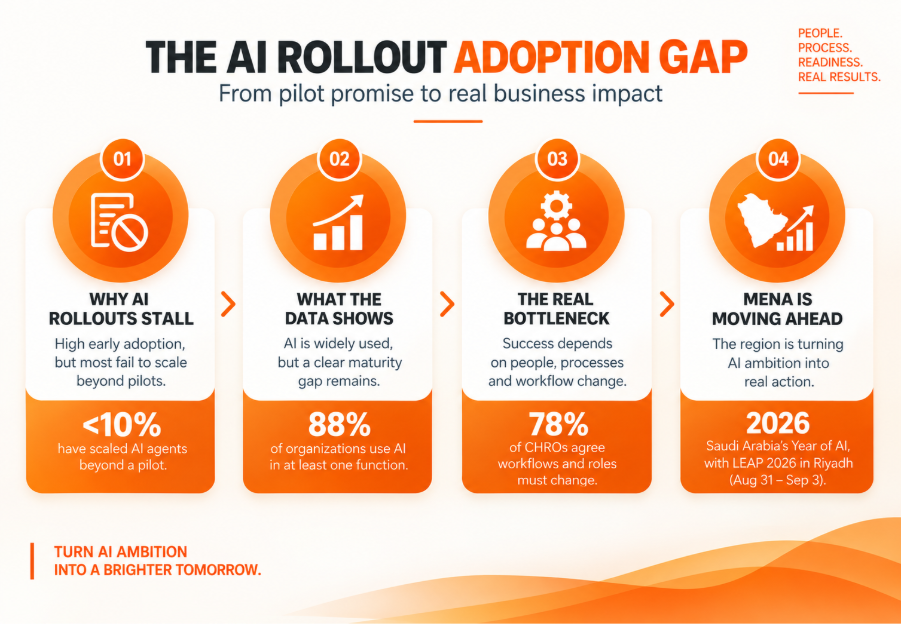
A few things consistently separate deployments that stick from ones that quietly get abandoned:
- Sequence by workflow, not by department. One high-friction process done well end to end, deal health scoring, case triage, lead qualification, beats a shallow rollout spread across ten teams that never gets past the pilot stage.
- Redesign the workflow before training anyone on the tool. Training people on a new interface without changing the process underneath it is how organizations end up with expensive shelfware nobody opens after week two.
- Put ownership in one place. The lack of data ownership is the main cause of stalled projects, so one senior owner must take responsibility on managing both data quality and workflow changes, not splitting them among teams that usually do not communicate.
- Monitor the adoption weekly, rather than every three months. By the time a review three months later indicates low usage, the habit gap has already set.
- Think of governance as something that must be launched at the beginning, rather than installed later. This will prevent difficulties.
What's Happening in MENA Right Now
The region offers a real-time view of this exact shift playing out at scale. Saudi Arabia has formally named 2026 its "Year of Artificial Intelligence," and LEAP 2026, the Kingdom's flagship technology event, was held in Riyadh from August 31 to September 3, moved this year specifically to align with that theme. The conversation across the Kingdom has visibly shifted from whether to adopt AI to how to turn that adoption into measurable value, which is exactly the implementation gap this piece is working through.
The UAE is running a parallel push, with government and industry programs throughout the year focused on moving organizations from being merely AI-equipped to genuinely AI-native. Across the wider GCC, national visions like Saudi Vision 2030 are treating workforce readiness as seriously as infrastructure.
The pattern here lines up with the global data. MENA organizations aren't behind on adoption, in several respects they're ahead of it, but the same challenge of turning access into embedded, everyday use applies here just as much as anywhere else.
Change Management Checklist for Sales and Service Leaders
Before scaling any AI agent past a pilot, a few questions are worth answering honestly:
- Has the workflow actually been redesigned, or has the AI just been bolted onto the existing one without changing how work gets done?
- Is there a single owner accountable for both data quality and adoption, or are those responsibilities split across teams that don't coordinate?
- Are usage numbers reviewed weekly during the first quarter, or only at the next scheduled business review?
- Does the rollout plan include role changes for the people most affected, or does it assume everyone adapts on their own?
- Is governance documented before launch, or planned as a cleanup exercise for later?
Conclusion
The organizations pulling ahead in 2026 are not necessarily the ones with the most advanced models. They're the ones treating rollout as a change management problem with a technology component, rather than the other way around. Closing the gap between adopting AI and actually running it well has far more to do with people, process discipline, and honest ownership than with which model happens to sit underneath the tool.
Build an AI Rollout That Sticks
Align people, processes, and technology to drive lasting adoption and enterprise-wide impact.
Talk to Our Experts.Frequently Asked Questions
Embedding AI tools into real business workflows, not just approving or piloting them.
Poor data readiness, missing architecture, and unclear ownership, more than the technology itself.
Workflow redesign, according to McKinsey's research on enterprise AI adoption.
It has named 2026 its Year of Artificial Intelligence, with LEAP 2026 held in Riyadh from August 31 to September 3, timed specifically around that theme.
Both are only as valuable as the workflow they're embedded into. This piece covers the change management work that determines whether either delivers real value or stalls at pilot stage.
Our Salesforce partner practice runs this same rollout-readiness assessment with clients before recommending any AI agent deployment, so the plan accounts for ownership, workflow, and governance from day one.
Keep reading
Ready to build smarter? Let's talk.
Our experts are ready to help you turn ideas into production-ready AI, cloud and digital solutions.
Get in touch →Let's Discuss Your Growth Strategy
Let's discuss how we can help you accelerate growth, improve efficiency, and drive real business outcomes.