 AI-First Culture
The Hidden Integration Crisis Slowing MENA's Digital Transformation and the MuleSoft Strategy to Solve It
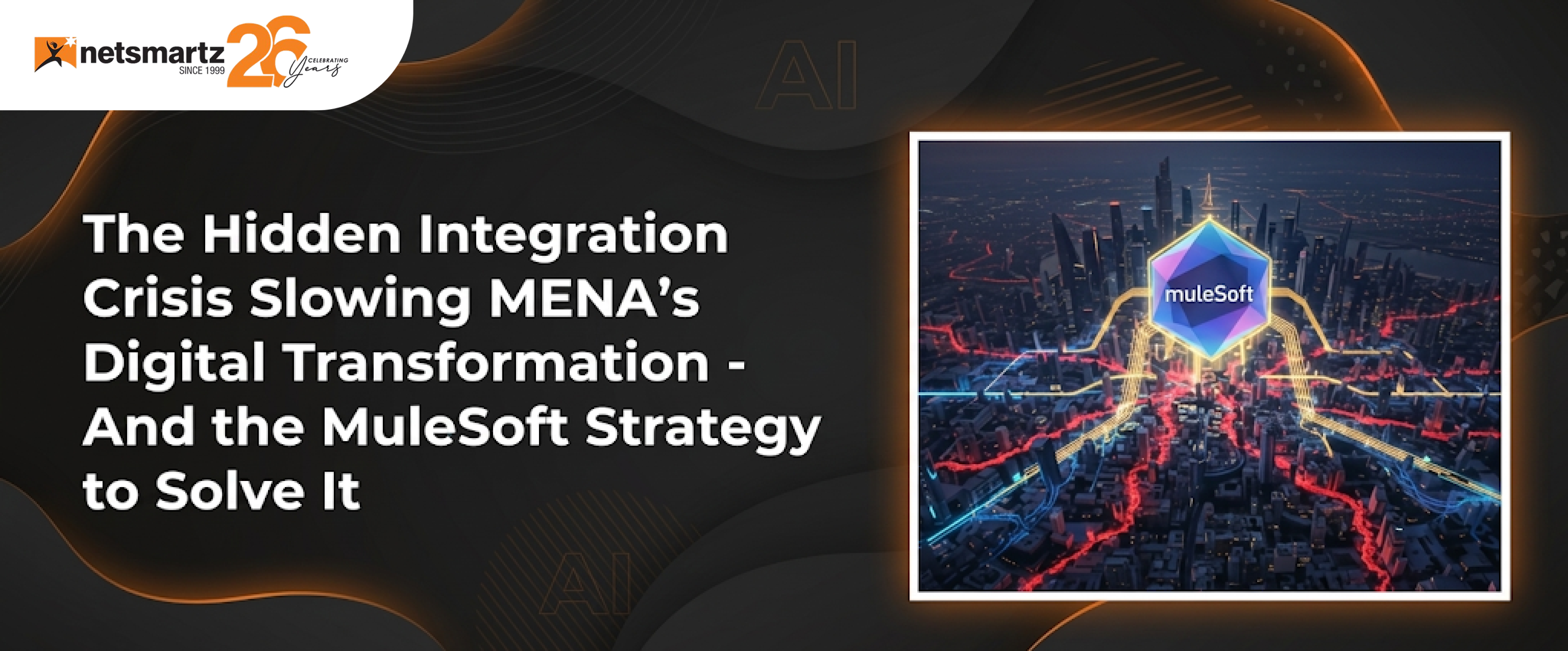
The Middle East and North Africa (MENA) region is engaged in a historic, hyper-accelerated digital push. Driven by national mandates like Saudi Vision 2030 and similar bold initiatives across the GCC, enterprises in finance, government, energy, and logistics are aiming for hyper growth, operational efficiency, and a truly digital customer experience.
Yet a fundamental challenge is causing transformation initiatives to stall: the hidden integration crisis. Organizations are investing billions in new cloud platforms, AI, and specialized SaaS applications, but these systems remain isolated, crippled by fragile, old-school connections.
The core problem is not a lack of vision. It is the reliance on brittle, point-to-point integration methods that cannot scale to meet the speed and complexity of the region’s ambitious goals. This guide provides a strategic, authoritative overview for MENA decision-makers on how to identify the crisis and leverage MuleSoft’s approach to build a sustainable, future-proof digital foundation.
Why MENA's Digital Strategy Hits an Integration Wall
Digital success requires more than just new applications. It demands seamless, real-time data flow across the entire enterprise. Currently, many large MENA enterprises face three interconnected integration hurdles.
1. The burden of legacy systems
Many foundational institutions rely on decades-old, highly customized core systems. While reliable, these systems are inflexible. Every attempt to connect to a new digital service, like a mobile app or a new regulatory reporting system, requires complex, one-off coding. This creates a severe project backlog, high maintenance costs, and prevents true legacy system modernization.
2. The sprawl of data silos
Rapid investment in specialized applications has led to pockets of fragmented information. Customer data lives in the CRM, financial data in the ERP, and identity data in a separate system. Business processes break down at the seams. Customer experiences become inconsistent, and a single view of the customer becomes unattainable, an issue that directly impacts the bottom line for enterprises managing customer-centric digital transformations.
3. The lack of strategic governance
Custom, point-to-point integrations lack a centralized structure. Security, monitoring, and error handling are managed inconsistently across dozens of connections. This results in API sprawl chaos, making compliance and regulatory adherence difficult and exposing the enterprise to significant security risks, which is unacceptable in sensitive sectors like government and financial services.
MuleSoft: The Strategic Enabler for Enterprise Integration
The solution lies in shifting from a transactional, project-based view of integration to a strategic, platform-based approach: API-led connectivity. Organizations often choose to hire a MuleSoft developer or work with experienced integration partners to design, implement, and optimize an API-led architecture that aligns with long-term business goals. MuleSoft’s Anypoint Platform enables organizations to transform IT assets into a secure, discoverable application network architecture.
Building the Reusable Digital Foundation
MuleSoft eliminates point-to-point chaos by creating a three-layered, reusable architecture. System APIs unlock core systems like ERP and mainframes and isolate them from change, facilitating legacy system modernization without replacement. Process APIs orchestrate data and logic across multiple systems to execute a business function, like onboarding a customer. They ensure process consistency and accelerate time to market. Experience APIs tailor data consumption for specific channels, mobile, partner portals, and web. They drastically speed up front-end development and digital customer experience innovation.
Quantifiable Strategic Advantages in MENA
Accelerated delivery through reuse
This shift toward reusable integration assets is becoming increasingly important as enterprises prioritize speed and agility. According to McKinsey, organizations with modern technology foundations and adaptable enterprise architectures are better positioned to accelerate digital transformation, improve delivery speed, and build scalable capabilities for long-term growth.
Simplified hybrid integration
MuleSoft’s platform seamlessly connects systems running in local, on-premises data centers with global public clouds, ensuring compliance with local data residency requirements. This is critical for MENA organizations that must adhere to regional regulations while leveraging modern, cloud-based capabilities.
Governance at scale
The Anypoint Platform provides centralized API management and API lifecycle management tools, ensuring consistent security, logging, and monitoring across all APIs. This is vital for high-compliance sectors where audits and regulatory adherence directly impact business operations.
Strategic Roadmap: From Chaos to Operational Agility
Success with MuleSoft requires a strategic shift in operating model. A practical roadmap includes:
- Identify strategic assets: target foundational systems critical for top business outcomes, like customer identity, and build the first 5 to 10 System APIs.
- Establish API governance: define standards for security, performance, and documentation to create a centralized API-led architecture and policy framework.
- Pilot and prove ROI: deliver a high-visibility project, like a new digital service, using the new APIs to prove accelerated time to market and secure executive buy-in.
- Scale enablement and training: teach in-house teams API consumption and microservices integration, shifting organizational culture toward reuse and self-service.
Final Thoughts
The success of MuleSoft’s integration strategy hinges on a single factor: the ability to unify data and processes across a fragmented enterprise landscape. By adopting the API-led connectivity model, organizations can move past the limitations of traditional integration, transforming their IT department into a scalable, high-velocity engine for innovation.
By adopting the API-led connectivity model, organizations can move beyond fragmented systems and create a flexible digital foundation that supports faster innovation, stronger governance, and sustainable growth across the MENA market.
“Stop letting legacy limitations and API sprawl slow your regional ambitions. Start building the resilient, reusable digital foundation that will define competitive leadership in the MENA market.”
Ready to solve your integration crisis?
Talk to our Netsmartz team about building your API-led digital foundation.
Frequently Asked Questions
API-led connectivity is an architectural approach that structures integration as reusable layers of APIs—System, Process, and Experience—rather than point-to-point connections. It is crucial for the GCC because it provides the operational agility and speed needed to meet fast-paced national digital mandates and Vision 2030 goals.
MuleSoft’s System APIs encapsulate fragile legacy systems and create a clean, governed interface. This decouples the core system from front-end change, allowing organizations to modernize customer experiences without risky full-scale replacement.
Yes. The MuleSoft Anypoint Platform centralizes API lifecycle management, governance, security, and monitoring. This replaces decentralized chaos with a single controlled environment where security policies and performance standards are enforced across all APIs.
The main ROI comes from faster time to market. By reusing existing APIs, development time for new digital initiatives can often be reduced by 50 to 80 percent compared to building new custom integrations.
Absolutely. MuleSoft’s runtime environment can be deployed in the cloud, on premises, or in hybrid environments, making it well suited for organizations that must meet local data residency and compliance rules while using global cloud services.
The API-led approach directly supports the economic diversification and digital transformation pillars of Vision 2030 by enabling business process automation, faster service delivery, data unification, and higher operational agility.
Ready to build smarter? Let's talk.
Our experts are ready to help you turn ideas into production-ready AI, cloud and digital solutions.
Get In Touch →Let's Discuss Your Growth Strategy
Let's discuss how we can help you accelerate growth, improve efficiency, and drive real business outcomes.