 AI-First Culture
Challenges Faced by Real Estate Brokers in MENA and How Technology Solves Them
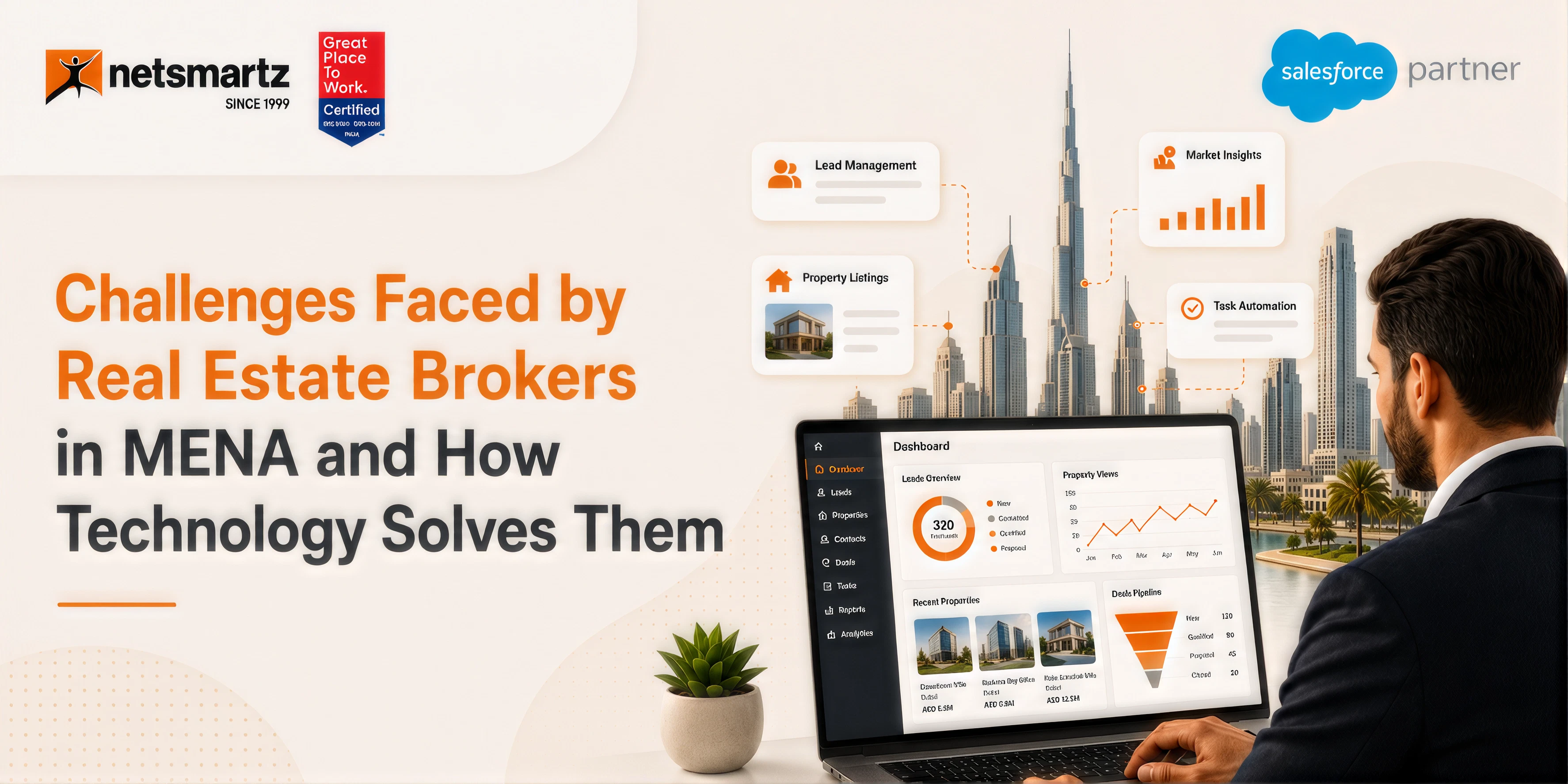
Brokers across Dubai, Abu Dhabi, and Riyadh operate in one of the fastest growing property markets in the world, yet many still run that growth on fragmented systems built for a slower, smaller industry. Understanding the real estate brokers MENA challenges behind this growth is the first step to fixing them. Regulatory compliance across RERA, DLD, and Trakheesi permits sits scattered in manual filings. Leads pour in from Property Finder, Bayut, Aqarmap, and WhatsApp with no single view of who is ready to buy. Off plan sales come with staged payment plans and escrow rules spreadsheets were never built to track. International and cash buyers need identity checks that slow deals down if done manually. Paper based transactions still create bottlenecks a digital signature could remove in minutes. And sales, marketing, and compliance teams often work off entirely different numbers. Each problem already has a proven technology fix, and the brokerages moving fastest are the ones closing that gap first.
Why the MENA Real Estate Market Is Different
Generic real estate technology advice does not map cleanly onto this region. Dubai alone recorded roughly AED 431 billion in transaction value in the first half of 2026, and that scale of activity is exactly why the operational gaps below matter more here than almost anywhere else. Consider four factors that set the market apart:
- Off plan sales make up a dominant share of transaction volume in Dubai and increasingly Saudi Arabia, meaning brokers manage multiyear payment schedules rather than single closing dates.
- A large share of buyers is international or expatriate, often purchasing remotely and requiring cross border verification.
- Transactions frequently involve significant cash components, raising compliance requirements many Western markets do not face at the same scale.
- Lead generation runs almost entirely through a handful of portals, Property Finder and Bayut chief among them, plus heavy WhatsApp led inquiries that rarely show up cleanly in a traditional CRM.
Together, these factors mean a brokerage in Riyadh or Dubai is solving a genuinely different problem than one in London or Toronto. According to research from global consulting firms like Deloitte, real estate organizations are increasingly prioritizing digital transformation, automation, and data-driven decision-making to improve operational efficiency and customer experience in rapidly evolving markets.
The Core Challenges
Fragmented Regulatory Compliance
RERA and DLD requirements, Trakheesi advertising permits, and Oqood registration for off plan units each carry their own paperwork, deadlines, and penalties. This happens here because Dubai runs one of the most tightly regulated property advertising systems in the world. Every listing needs a valid Trakheesi permit tied to a specific property and agent, and advertising without one can trigger fines starting at tens of thousands of dirhams. Brokerages juggling dozens of active listings often lose track of which permits are current. Automated compliance and permit tracking software solves this by linking each listing to its permit status in real time and flagging renewals before they lapse.
Multi Portal, Multi Language Lead Management
A single brokerage might receive leads from Property Finder, Bayut, Aqarmap, a WhatsApp business number, and a walk in inquiry, often in three or four languages, in the same week. This happens because the region's buyer base is genuinely international, and no single portal dominates the way one platform might elsewhere. Without a unified system, leads sit in separate inboxes and get followed up inconsistently. A CRM built with native portal integrations and multilingual support solves this by pulling every inquiry into one pipeline, regardless of source or language. Modern broker portal solutions further help brokerages centralize property listings, lead interactions, and agent workflows in one connected environment.
Off Plan Property Complexity
Off plan sales dominate transaction volume in this region, and each one comes with a staged payment plan, a dedicated escrow account under Law No. 8 of 2007, and ongoing coordination with the developer through construction milestones. This happens because off plan buying is the default model here rather than the exception. Tracking payment schedules and escrow releases in a spreadsheet becomes unmanageable once a brokerage juggles more than a handful of active projects. Transaction management tools built for staged, off plan sales solve this by automating milestone tracking and payment reminders.
International and Cash Buyer Verification
With buyers arriving from more than 200 nationalities and a meaningful share of cash transactions, brokers face heavier identity and source of funds verification than most global markets require. This happens because international capital brings real anti money laundering exposure alongside the growth. Manual document checks slow deals and creates compliance risk if records are incomplete. Digital KYC and e verification tools solve this by automating identity checks and flagging incomplete documentation early.
Manual, Paper Heavy Transaction Processes
Despite the region's reputation for rapid digitization, plenty of brokerages still print, sign, and scan contracts by hand. This persists because legacy habits are hard to break even as government platforms modernize around brokers. Dubai's REST platform has pushed much of registration online, but brokerage side paperwork often lags behind. E signature and digital transaction platforms solve this by mirroring that same shift.
Data Fragmentation Across Teams
Sales, marketing, and compliance teams frequently work from different spreadsheets and different definitions of the same numbers. This happens because each function historically built its own reporting habit around its own tools. Centralized dashboards and analytics solve this by giving every team the same live numbers.
Here is how those six challenges map to their fix:
| Challenge | Root Cause in MENA | Tech Fix |
|---|---|---|
| Fragmented regulatory compliance | Multiple permit systems (RERA, DLD, Trakheesi, Oqood) with strict deadlines | Automated compliance and permit tracking software |
| Multi portal, multi-language leads | International buyer base, no single dominant portal | Unified CRM with portal integrations and multilingual support |
| Off plan complexity | Off plan sales are the default transaction model | Transaction management tools built for staged sales |
| Buyer verification | High share of international and cash buyers | Digital KYC and e verification tools |
| Paper heavy processes | Legacy habits despite government digitization | E signature and digital transaction platforms |
| Data fragmentation | Teams built separate reporting habits around separate tools | Centralized dashboards and analytics |
How Technology Adoption Is Playing Out in the Region
Government led digitization has done much of the heavy lifting so far. Dubai's REST platform, blockchain backed title deed registration, and automated valuation models have all moved from pilot projects to standard infrastructure, giving brokerages a strong foundation to build on.
A recent Forbes roundup of technology challenges across the wider real estate industry found that data security concerns during system migration and resistance to changing established workflows remain the two most common adoption barriers, and both show up here too. Cost is real for smaller brokerages, cybersecurity concerns are legitimate given the volume of financial data involved, and training time competes with time spent on active deals. None of this is a reason to wait, it is a reason to sequence adoption carefully.
What Brokers Should Prioritize First
Trying to modernize every function simultaneously usually stalls out. A more workable sequence looks like this.
- Start with compliance and licensing tools, since a missed Trakheesi permit or an unregistered Oqood contract carries an immediate financial penalty.
- Move to lead and CRM consolidation next, bringing Property Finder, Bayut, Aqarmap, and WhatsApp inquiries into one pipeline.
- Add advanced analytics and dashboards last, once compliance and lead management are already centralized, so the data feeding those dashboards is trustworthy.
Compliance failures carry immediate financial penalties, while analytics only add value once the underlying data is already clean. Platforms such as PropSmartz are built around this same sequence, starting with compliance and permit tracking before layering in unified CRM and reporting.
Bottom Line
Every challenge above already has brokerages in this region solving it today, and the ones pulling ahead are simply sequencing their technology adoption instead of waiting for a perfect all in one fix. Solving the real estate brokers MENA challenges covered here is less about buying more software and more about picking the right order. Built on Salesforce, PropSmartz brings compliance tracking, multilingual CRM, and off plan transaction management into a single platform for MENA brokerages. Our RERA Compliance Checklist for Brokers walks through exactly which permits, registrations, and renewal deadlines to track first, before you touch a single dashboard or CRM migration.
“Growth becomes sustainable when brokerages replace fragmented processes with connected digital operations.”
Turn Real Estate Challenges into Competitive Advantage
Ready to solve your biggest brokerage challenges with smarter technology?
Frequently Asked Questions
RERA and Trakheesi compliance, multi portal lead management, off plan payment tracking, and buyer verification are the top challenges brokers face in 2026.
It is not legally mandated by name, but every broker must keep RERA registration and Trakheesi permits current, which is why most brokerages now use tracking software.
Government platforms like Dubai REST and blockchain title registration are digitizing compliance, while brokerage side CRMs and e signature tools are catching up fast.
Brokerages use a mix of proptech specific CRMs and configurable platforms like Salesforce, often paired with local portal and compliance integrations.
It is the mandatory Dubai Land Department advertising permit that every listing needs before it can be published on any portal or channel.


Ready to build smarter? Let's talk.
Our experts are ready to help you turn ideas into production-ready AI, cloud and digital solutions.
Get in touch →Let's Discuss Your Growth Strategy
Let's discuss how we can help you accelerate growth, improve efficiency, and drive real business outcomes.