 AI-First Culture
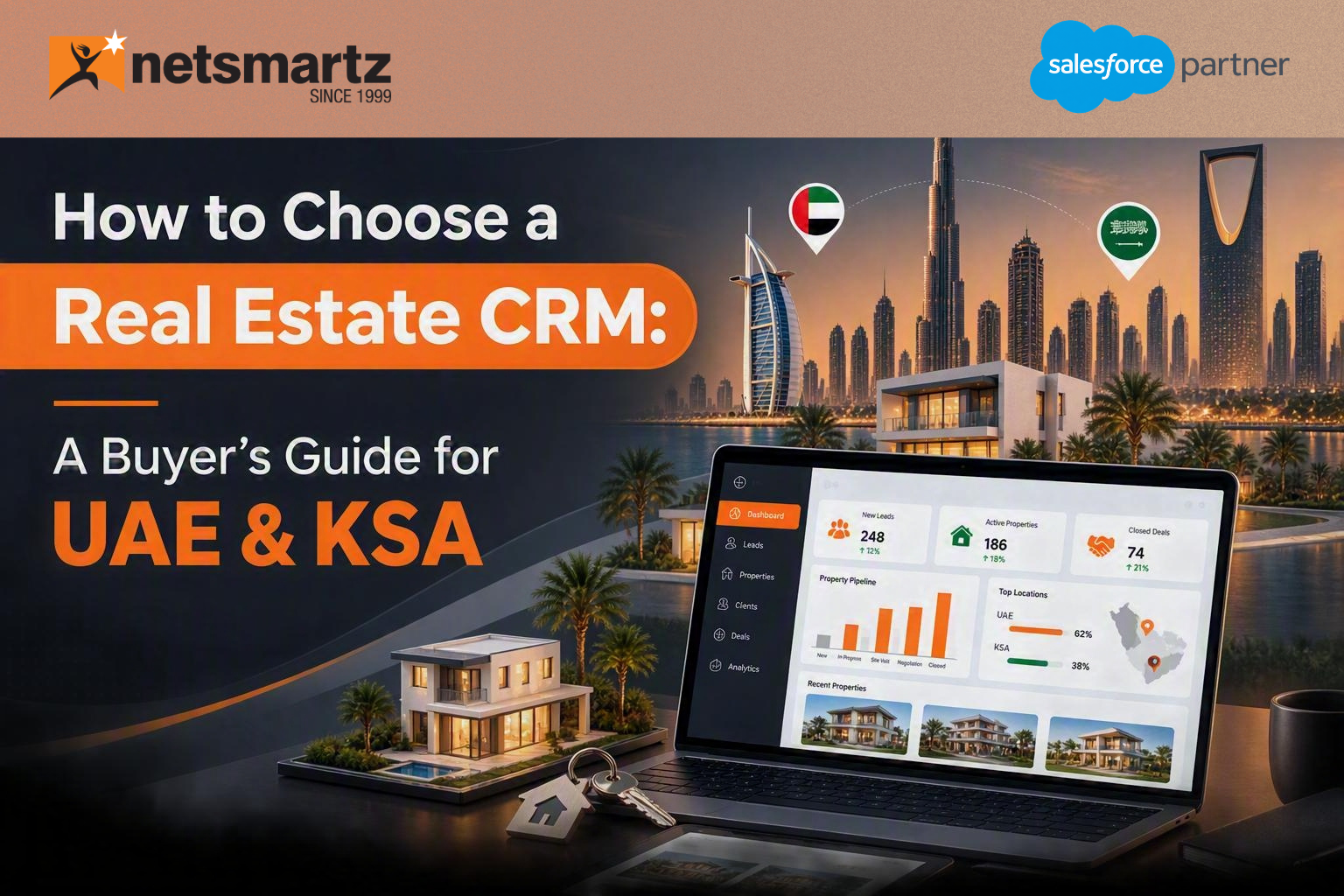
How to Choose a Real Estate CRM: A Buyer's Guide for UAE & KSA
"The agencies winning in Dubai and Riyadh right now aren't the ones generating the most leads. They're the ones who never let a single one go cold."
Every real estate agency eventually hits the same wall. Leads start piling up faster than spreadsheets, and WhatsApp threads can handle, and someone finally says, "we need a CRM." Then the real problem starts. Most CRMs on the market weren't built with UAE or KSA agencies in mind.
Dubai's real estate sector closed 2025 with a record AED 919 billion in total transaction value, up 20.8% year on year, according to data from the Dubai Land Department reported by Gulf News. Saudi Arabia's market is on a similar climb, valued at roughly $77.2 billion in 2025 and projected to nearly double by 2034 as Vision 2030 initiatives accelerate, according to IMARC Group's market research. Agencies still running their pipeline out of spreadsheets and personal WhatsApp are the ones getting left behind while this growth plays out.
Off-plan launches. Multi-developer portfolios. Bilingual client bases. RERA and Ejari compliance. A sales cycle stitched together from calls, WhatsApp, and site visits, sometimes all in the same hour. The region's real estate market has its own rhythm, and a generic CRM built for a different market will fight you at every step.
This guide walks through what actually matters when evaluating a real estate CRM for the UAE or KSA market, so the decision comes down to fit rather than whichever platform had the best sales pitch.
What a Real Estate CRM Should Actually Do
Strip away the marketing language and a real estate CRM has to do six things well. At minimum, it should:
- Capture and route lead automatically from portals, ads, and referrals
- Track every property, unit, and listing against buyer interest
- Manage the sales pipeline from inquiry to handover
- Log every call, WhatsApp message, and site visit against the right contact
- Automate follow-ups so leads don't go cold between touches
- Give management visibility into agent performance and pipeline health
Fall short on more than one or two of these, and what you've bought is a fancy lead tracker, not a system that actually runs the sales operation. A purpose-built platform like PropSmartz tends to hold up better here than a generic CRM stretched to cover real estate, mainly because these workflows are the whole point of the design rather than an afterthought.
Why Generic CRMs Struggle in This Market
Most global CRM platforms assume a B2B sales motion: one deal, one decisionmaker, a few weeks to close. Real estate in the UAE and KSA rarely looks like that. A single buyer might be evaluating five projects across three developers at once. A single agent might be juggling off-plan payment plans, resale listings, and rental mandates in the same week. Multiply across a team and a generic CRM's rigid deal-stage logic buckles fast.
Then there's the compliance layer. RERA registration numbers, Ejari details, Trakheesi permits, and DLD requirements in the UAE, or the equivalent obligations in KSA, are part of doing business legally, full stop. A platform that treats these as afterthoughts, or skips them entirely, creates real operational risk down the line. Worth reading on what proper Ejari and DLD compliant software actually needs to cover before shortlisting anything.
Key Features to Look For
1. Property and Portal Integration
The CRM should sync directly with the portals your agency actually uses, think Bayut, Property Finder, Dubizzle, Aqar, so leads flow in automatically instead of getting copied by hand from an inbox. Manual entry is where leads die.
2. WhatsApp and Multi-Channel Communication
For most agencies in the region, WhatsApp carries the bulk of the sales conversation. A CRM that sends, receives, and logs those messages against a lead's record, alongside calls and email, saves agents from juggling three separate tools just to keep one conversation straight.
3. Bilingual, Arabic-Ready Interface
If the platform doesn't run comfortably in Arabic, both the interface and client-facing documents, it creates friction for a meaningful share of your team and client base. In this market, that's close to a baseline requirement.
4. Off-Plan and Payment Plan Support
Off-plan sales come with staged payment schedules, developer milestones, and handover timelines. A standard "deal closed" pipeline simply can't represent any of that. Look for a system that tracks a sale through construction milestones and installments, all the way to handover.
5. Compliance and Documentation Fields
RERA numbers, Ejari records, permit tracking, audit trails. These should be native fields, built into the system, rather than custom workarounds bolted on after the fact. It matters for regulatory compliance and for protecting the agency if a transaction is ever disputed.
6. Mobile-First Design
Agents in this market spend most of the day on their phones during site visits. A CRM that only performs well on desktop simply won't get used consistently. Test the mobile app yourself before signing anything. Marketing screenshots don't count.
7. Reporting That Matches How Leadership Actually Manages
Pipeline value by project. Agent performance by source. Conversion rate by portal. Leadership needs the business sliced this way, and a generic sales funnel report built for a different industry won't get them there.
A Practical Framework for Making the Choice
Step 1: Map Your Actual Sales Process First
Before looking at a single vendor, write down how leads move through your agency today: where they come from, who touches them, where they tend to stall. A CRM should bend to fit that process. Don't force the team to relearn how they sell.
Step 2: Shortlist Based on Regional Fit, Not Just Features
A long feature list doesn't mean much if the platform can't handle Arabic, WhatsApp, or local compliance well. Narrow things down first to platforms with a genuine track record in UAE or KSA real estate, then compare features inside that shortlist.
Step 3: Test With Real Data, not a Demo Script
Vendor demos are built to look good; that's their whole purpose. Ask to run a trial with a slice of your actual leads and listings instead and let agents try it for a week before anyone decides, not just management.
Step 4: Check Integration with What You Already Use
Portals. Accounting software. WhatsApp Business. Email. Confirm the CRM genuinely integrates with your existing stack rather than quietly asking you to replace tools that already work fine.
Step 5: Evaluate the Vendor, Not Just the Product
Ask about local support hours, onboarding, and how fast issues actually get resolved. Great features paired with unresponsive support in your time zone cause more headaches than they solve. A vendor with real regional implementation experience, an established Salesforce partner working across UAE and KSA real estate, for instance, usually shortens this learning curve by a wide margin.
Common Mistakes Agencies Make
- Choose on prices alone. The cheapest CRM that doesn't fit how your team sells ends up costing more in lost leads and wasted onboarding time than a pricier platform people actually use.
- Skipping agent buy-in. If the people entering data every single day had no say in the decision, adoption suffers. A CRM nobody updates are worse than no CRM at all.
- Underestimating migration. Moving years of contacts, listings, and history into a new system takes real planning. Rush it and you'll likely lose data, then spend a rocky few months untangling the mess.
- Ignoring compliance until it's a problem. RERA and Ejari requirements belong in the evaluation stage, not something discovered mid-audit.
Where This Leaves You
The right CRM for a UAE or KSA real estate agency rarely comes down to the longest feature list. It comes down to fit: WhatsApp-first, portal-driven, bilingual, compliant with local regulation from day one.
Map your process. Shortlist for regional fits. Test with real data. Weigh the vendor as carefully as the product itself. Get that right and the CRM becomes the system your team genuinely runs the business on, instead of yet another tool competing with the spreadsheet everyone still quietly keeps open.
Looking for a CRM built for how UAE and KSA agencies actually sell?
Get in touch to see how the right platform fits your team's process, not the other way around.
Contact Us NowFrequently Asked Questions
A generic CRM tracks deals and contacts. A real estate CRM adds property and listing management, portal integrations, and workflows built around inquiries, viewings, and handovers, rather than a single B2B sales cycle.
For most UAE and KSA agencies, yes. Both the interface and client-facing documents should work comfortably in Arabic. Treating it as optional creates friction for a large share of teams and clients.
Very. WhatsApp carries most of the sales conversation for agencies in this region, so a CRM that can't log and manage those messages misses a large share of the actual sales activity.
It should. Off-plan deals involve staged payments and construction milestones that a standard closed-deal pipeline can't represent. Check this specifically during evaluation, not after signing.
RERA registration numbers, Ejari details, and permit tracking in the UAE, or the equivalent regulatory fields in KSA, should be native to the system rather than manual workarounds.
It varies with data volume, but agencies should plan several weeks, not days, to move contacts, listings, and history over without losing information or disrupting active deals.
Yes. The people entering data daily need to find the system usable, or adoption stalls no matter how strong the feature list looks on paper.
Keep reading

Calculating the ROI of Autonomous AI Agents: A Framework for Service and Sales Leaders

Scaling Sales Intelligence: Enterprise AI Rollout and Change Management

The Real Cost of Context Switching: Why Sales Teams Lose Deals Waiting on Data
Ready to build smarter? Let's talk.
Our experts are ready to help you turn ideas into production-ready AI, cloud and digital solutions.
Get in touch →Let's Discuss Your Growth Strategy
Let's discuss how we can help you accelerate growth, improve efficiency, and drive real business outcomes.