 AI-First Culture
How Digital Transformation is Changing Broker Management in the GCC Real Estate Market
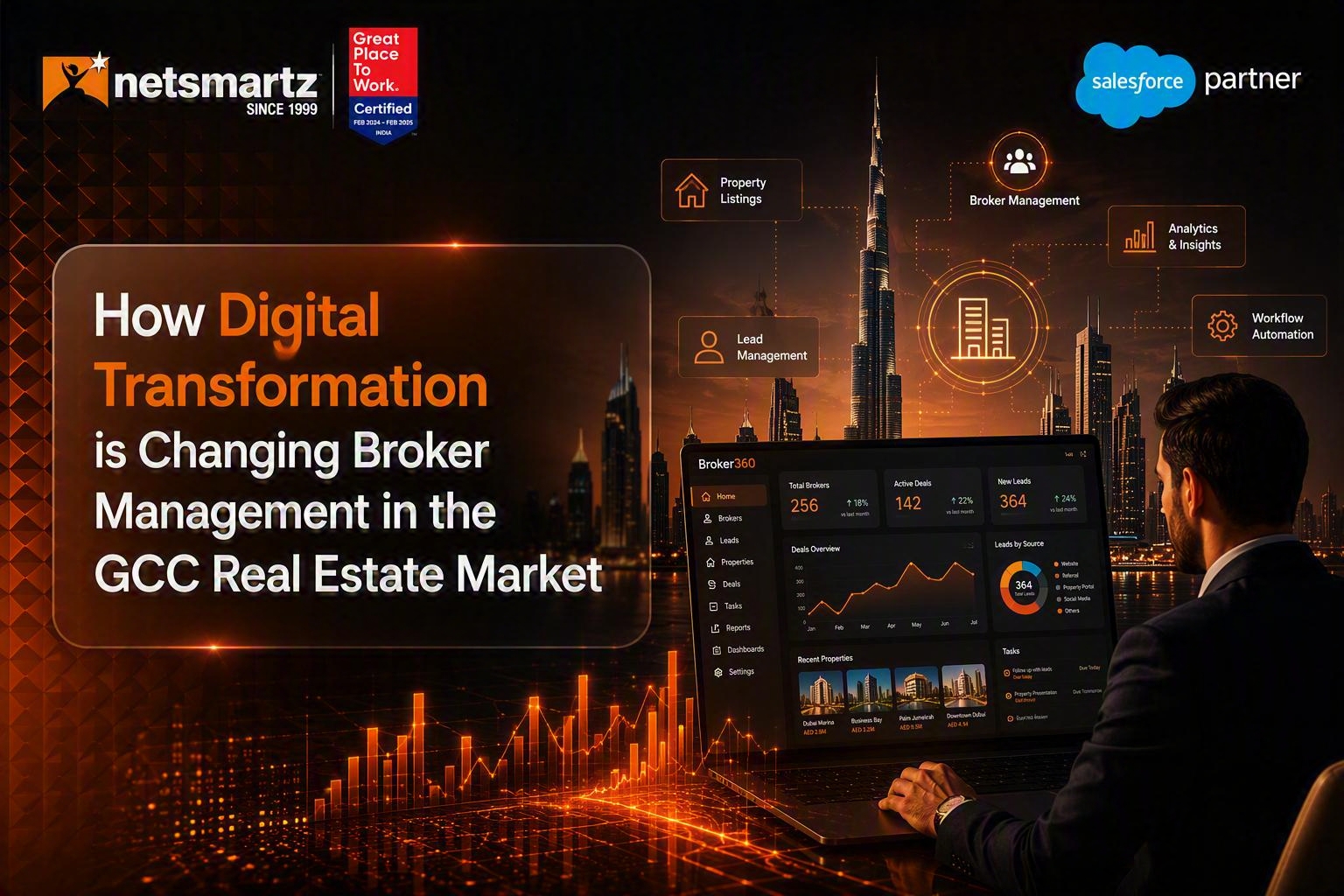
Digital transformation in GCC real estate broker management has moved from a talking point to a lived reality in 2026, driven by four forces arriving at once: government-backed digital infrastructure, blockchain-based tokenization moving from pilot to live trading, AI-powered broker tools replacing manual pipeline management, and a fresh wave of venture capital funding the platforms behind all of it. Brokerages that treated these as separate, optional upgrades a year ago are now finding they're converging into a single operating shift, one being led by regulators as much as by any single startup.
The Forces Driving This Shift
Four distinct forces are driving proptech GCC adoption and reshaping how brokerages in the region operate:
| Force | What Changed | Example |
|---|---|---|
| Government-backed infrastructure | Registration, permits, and market data now built as public digital infrastructure | DLD's PropTech Connect Middle East 2026, 4,000+ participants |
| Tokenization | Property ownership converted into tradable digital tokens, now with live resale | DLD Phase 2 launch, Feb 20 2026 |
| AI-powered broker tools | Static CRMs replaced by systems that score leads and flag risk automatically | Platforms like PropSmartz applying AI to lead scoring and pipeline management |
| Proptech capital inflow | Institutional money backing the infrastructure above at scale | Stake's $31M Series B, Keyper's $11M Series A |
Government Led Infrastructure Is Setting the Pace
Much of what's changing in Dubai and Saudi real estate did not start with a startup, it started with a regulator. Dubai Land Department hosted PropTech Connect Middle East 2026 in February, the region's first edition of the event, bringing together more than 4,000 participants and 1,500 companies at the Grand Hyatt Dubai. The event marked the launch of the Dubai PropTech Hub, positioned as a strategic initiative to turn innovation into measurable economic value, explicitly framed against the Dubai Economic Agenda D33 and the Dubai Real Estate Strategy 2033.
DLD also runs REES, its real estate innovation platform, which sets a regional roadmap for proptech and AI adoption. This matters for brokerages because it signals that data standards, AI governance, and digital registration are being treated as market infrastructure every broker will eventually plug into — not a competitive edge any single firm can opt out of.
Data Integration Is Becoming a Broker Priority
As more parts of the GCC real estate market become digital, brokerages are dealing with more data sources than ever. Property portals, government platforms, CRMs, marketing channels, and transaction systems can all generate information that needs to work together.
Connected Data Sources
Brokerages increasingly need to bring lead, property, transaction, and compliance data into one connected workflow rather than managing separate spreadsheets and systems.
Less Manual Data Entry
Integrated systems can reduce repetitive work by moving information between platforms automatically, helping agents spend less time updating records and more time managing active opportunities.
Better Visibility Across Operations
When data is connected, brokerage leaders can see where leads are coming from, which agents are converting them, where deals are slowing down, and which properties are generating the most activity.
A Foundation for AI
AI tools are only as useful as the data they can access. Clean, connected brokerage data gives AI systems the context needed to score leads, identify risks, recommend next actions, and support faster decisions.
For GCC brokerages, data integration is becoming less about adding another tech layer and more about building the foundation everything else runs on. Much of this need traces back to the day-to-day real estate brokers MENA challenges brokerages are already navigating, fragmented compliance, multi-portal leads, and disconnected reporting which is exactly what connected data is meant to solve.
Blockchain and Tokenization Are Moving From Pilot to Platform
The most concrete proof that this shift is real, not aspirational, is what DLD did with tokenization in February 2026. After nine months of pilot testing that ran from March 2025 through February 2026, DLD activated Phase 2 of its Real Estate Tokenization Project, opening a secondary market where investors can buy, sell, and transfer fractional property tokens through the PRYPCO Mint app.
Roughly 7.8 million tokens tied to ten Dubai properties are now tradeable, backed directly by DLD registered title deeds and denominated in dirhams rather than cryptocurrency. The project runs under a regulated framework built jointly with the Virtual Assets Regulatory Authority and the Central Bank of the UAE, and DLD has stated a goal of tokenized assets reaching roughly seven percent of Dubai's real estate market, worth an estimated sixteen billion dollars, by 2033.
For brokers, this changes what a transaction even looks like. A single property can now have hundreds of fractional owners instead of one, which means broker management tools built around a single buyer per deal are already behind.
AI Is Reshaping Broker Management Day to Day
Alongside the infrastructure shift, brokerages are adopting AI tools that change how a pipeline gets managed on an ordinary Tuesday. A recent piece from McKinsey on where AI is creating real value in real estate argues that the industry is moving past isolated tools and toward full workflow redesign, with agentic AI systems handling entire domains like leasing and operations rather than single tasks, a shift McKinsey estimates could unlock hundreds of billions of dollars in value globally once organizations move beyond scattered pilots.
That shift is visible in GCC brokerages already using AI broker management software to score incoming leads by conversion probability, flag stalled deals before they go cold, and auto generate follow up content, work that used to depend entirely on an agent's memory and available hours in the day. Platforms such as PropSmartz are helping GCC brokerages apply AI to lead scoring, follow-ups, pipeline management, and day-to-day broker operations.
The practical effect is fewer leads falling through the cracks between the moment a portal inquiry lands and the moment an agent actually follows up, which matters even more in a market where a single brokerage can be juggling leads from four or five different portals in multiple languages at once.
Capital Is Following the Shift
None of this would be happening at this pace without real money behind it. UAE based proptech platform Stake closed an oversubscribed thirty one million dollar Series B in February 2026, led by Emirates NBD with participation from Mubadala's MENA Venture Capital Fund and Property Finder, taking the company's total funding to fifty eight million dollars and explicitly earmarked in part for advancing tokenization work.
Around the same period, UAE proptech Keyper raised an eleven-million-dollar Series A led by Speedinvest to expand its rent digitization platform, building on a prior thirty-million-dollar Sukuk financing agreement.
This is not scattered, speculative funding. It is concentrated in the exact three areas covered above, tokenization infrastructure, digital payment rails, and AI driven property management. Tracking real estate technology trends GCC 2026 investors are backing tells you where institutional money expects this market to be in three to five years, and it is a useful early signal for brokerage leaders deciding where to invest their own limited technology budget first.
What This Means for Smaller and Mid-Sized Brokerages
Not every brokerage has the budget to build tokenization infrastructure or a custom AI stack, and that's the real risk here. As larger firms and platforms consolidate around better data and AI infrastructure, smaller brokerages that stay on spreadsheets and disconnected tools risk losing ground on responsiveness and lead conversion, even if their market knowledge and client relationships are just as strong.
The practical response isn't to build in-house, it's to adopt AI-native platforms built for this shift rather than bolting AI onto legacy tools, and to treat clean, connected data as the first investment rather than the last.
What This Means for Brokerage Leaders
None of these four forces require rebuilding overnight, but they do require a plan:
- Government infrastructure (DLD's REES, blockchain title registration) isn't optional - treat it as a compliance baseline.
- Tokenization is early but structurally significant - worth watching even if you're not yet participating in fractional deals.
- AI broker management tools are the fastest area to see near-term returns, since they improve existing workflows rather than requiring a new transaction model.
- Proptech capital flow is a signal worth tracking the same way you'd track transaction volume or price trends.
Closing
The GCC real estate market isn't waiting for broker management software to catch up to regulation — in 2026, the regulator is often the one setting the pace. This is no longer four separate trends; it's one connected shift, and brokerages that treat government-backed infrastructure, tokenization, AI tooling, and capital flow as parts of the same story will be better positioned for what comes next.
“GCC real estate is moving from digital adoption to digital-first operations, with regulation, AI, and tokenization reshaping how brokerages work.”
Ready for the next phase of GCC real estate?
Explore how digital transformation is reshaping brokerage operations, compliance, AI adoption, and tokenization across the region.
Frequently Asked Questions
Proptech is the use of digital tools, AI, data platforms, and blockchain to change how real estate is bought, sold, financed, and managed.
Yes, Dubai Land Department launched a live secondary market for tokenized property in February 2026 through the government backed PRYPCO Mint platform.
DLD has launched PropTech Connect Middle East 2026, the Dubai PropTech Hub, and a two phase real estate tokenization project integrated directly into its title deed registry.
It is AI that manages an entire workflow such as leasing or deal management end to end, rather than handling a single isolated task like lead scoring alone.
It is shifting from static CRMs toward AI systems that score leads, forecast deal outcomes, and integrate directly with government backed compliance and tokenization infrastructure.
Ready to build smarter? Let's talk.
Our experts are ready to help you turn ideas into production-ready AI, cloud and digital solutions.
Get In Touch →Let's Discuss Your Growth Strategy
Let's discuss how we can help you accelerate growth, improve efficiency, and drive real business outcomes.