 AI-First Culture
Understanding Agentforce: how Salesforce's AI agents actually work
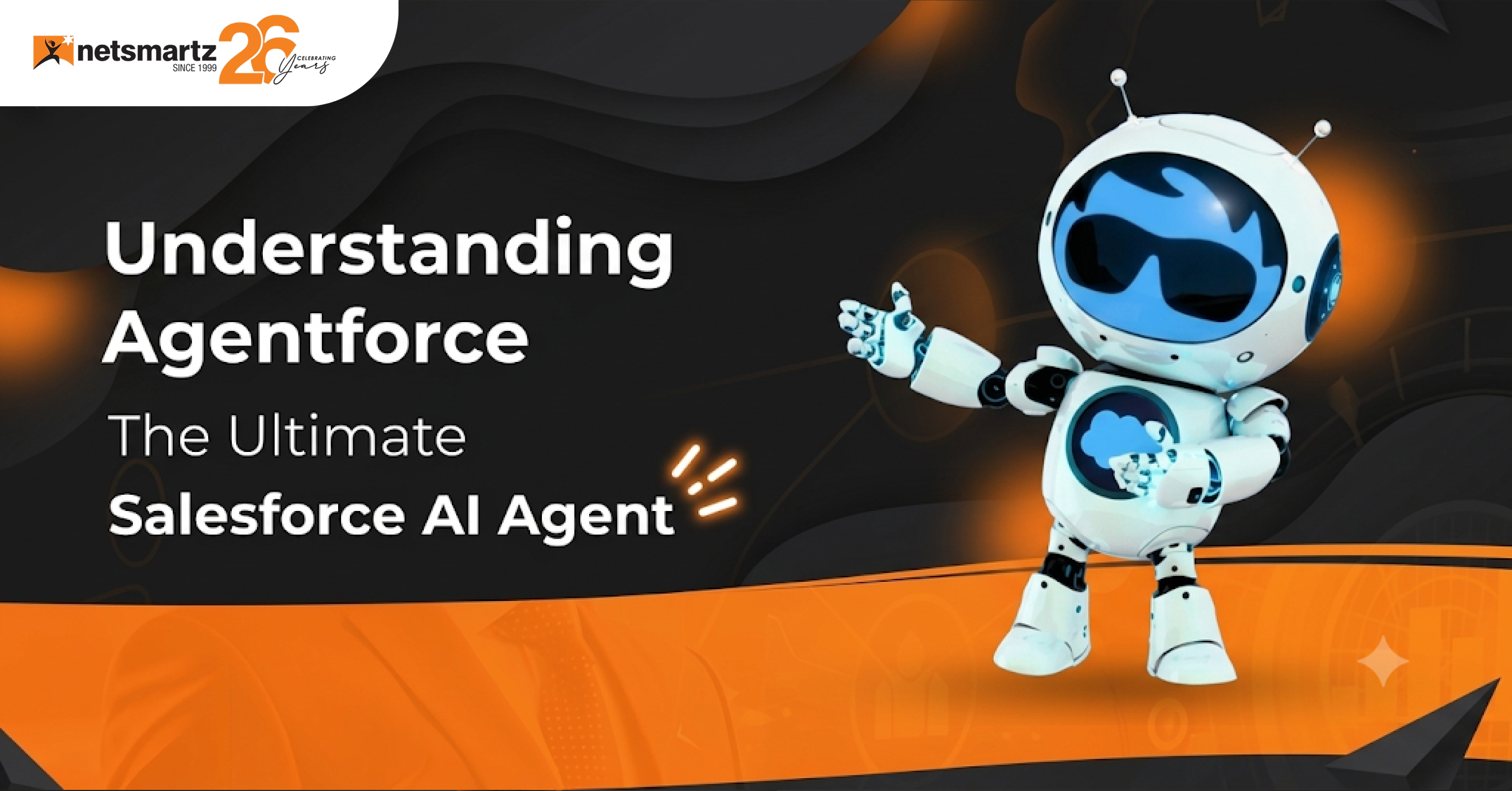
Here's what everyone's talking about: AI agents. Not chatbots. Not automated workflows. Actual agents that can think, decide, and take action without constant human direction. Salesforce Agentforce is their play in this space.
The reality? Most organizations don't fully understand what Agentforce actually does. They know it's AI. They know it's supposed to be smart. But what can it actually do? When does it make sense? When is it overkill? That's what we're breaking down.
What Is Agentforce?
Agentforce is Salesforce’s autonomous AI agent designed to handle tasks, not just answer questions like traditional chatbots. It understands customer situations, takes action, updates records, creates cases, and routes requests within Salesforce.
The rise of AI-powered automation is accelerating. According to McKinsey’s research, organizations are increasingly exploring generative AI to improve productivity, customer experiences, and business operations.
Agentforce works by connecting with Salesforce data, workflows, and processes to understand context and make decisions based on your business needs. Unlike generic AI tools, it is built around your data and operations, making automation more relevant and effective.
How Does Agentforce Work?
- It Understands Your Business: Agentforce gets trained on your data, your processes, and your workflows. It's not generic. It's specific to how you operate. That context is what makes it actually useful instead of just another AI that sounds smart but doesn't understand your world.
- It Takes Initiative: You don't have to ask it to do things step-by-step. You tell it the outcome you want, and it figures out the steps. Customer needs help? The agent handles it. Deal needs review? Agent flags it. Work just happens without constant human direction.
- It Learns and Adapts: As it handles more situations, it gets smarter. It understands edge cases. It learns what works and what doesn't work in your specific business. That adaptation is what separates Agentforce from static automated workflows.
- It Knows When to Ask for Help: This is actually critical. Agentforce doesn't just barrel ahead. When it encounters situations outside its confidence level, it escalates to humans. Smart automation knows its limits.
What Are the Real-World Use Cases of Agentforce?
Customer service is obvious. The agent handles routine inquiries. Updates customer records. Routes complex issues for humans. Support tickets drop. Resolution times improve. Customers don't wait to hold it.
Sales support is where things get interesting. Agents can analyze deals, flag risks, suggest next steps, and handle administrative tasks. Your sales team focuses on actual selling instead of paperwork.
HR and finance can use agents for routine requests. Employee onboarding questions. Expense report status. Benefits of inquiries. Agents handle it. Humans focus on strategy.
The key to all of these: agents handle routine work so humans can focus on complex, relationship-driven work.
What Are the Limitations of Agentforce?
It's not magic. It won't solve a broken process. If your business process is fundamentally broken, adding an AI agent won't fix it. You need to fix the process first.
It's not free labor. Yes, it reduces headcount needs, but implementation, training, and ongoing management have real costs. Factor that into your calculations.
It's not perfect. Agents make mistakes. They misunderstand context sometimes. They need human oversight. If you're expecting 100% accuracy with zero human intervention, you'll be disappointed.
It's not a replacement for human judgment in high-stakes decisions. Some decisions still need human wisdom, empathy, and accountability. Agents can help humans make better decisions. They shouldn't be making critical decisions alone.
"Agentforce is powerful because it handles routine work so humans can focus on what actually matters. That's where real value shows up."
How to think about implementation
Start with a real problem. What's taking up your team's time that's routine and repetitive? That's where agents help. Don't implement Agentforce just because it sounds cool.
Assess your data quality honestly. Agentforce is only as smart as the data it works with. If your Salesforce data is garbage, an agent won't magically make it useful.
Plan for training. Your team needs to understand what the agent can do and how to work with it effectively. Implementation isn't just technical. It's an organizational change.
Working with a Salesforce certified consulting partner can help organizations assess use cases, prepare data, configure Agentforce correctly, and create an adoption plan that aligns with business goals.
Budget for ongoing management. Agents need monitoring. They need feedback when they mess up. They need updates when business processes change. It's not set-and-forgot.
Conclusion
Agentforce represents a shift in how work gets done. Instead of automating specific tasks, you're delegating entire workflows to an AI agent. When it's implemented right, it frees humans to focus on strategic, relationship-driven work. When it's implemented wrong, it's just expensive technology that doesn't deliver.
The organizations getting value from Agentforce started with a real problem, invested in proper setup and training, and committed to ongoing management. That's the formula.
Considering Agentforce for your organization?
Explore the right AI agent approach for your business goals today.
Frequently Asked Questions
Agentforce operates autonomously within Salesforce. It doesn't just answer questions. It takes action—updates records, creates cases, executes workflows. Most AI tools are reactive. Agentforce is proactive.
Repetitive, routine work. Customer service tasks. Sales administrative burden. HR inquiries. Anything that's predictable and rule based. Complex, judgment-heavy work still needs humans.
It's good but not perfect. Accuracy depends on data quality, training, and complexity of tasks. Routine work? Very accurate. Complex edge cases? Less so. That's why human oversight matters.
Licensing costs vary. Implementation and customization add significant cost. Ongoing management has costs too. Calculate the total cost of ownership, not just licensing.
You can, but it requires Salesforce expertise and AI knowledge. Most organizations benefit from expert guidance during implementation to avoid expensive mistakes.
Reduced operational costs. Faster response times. Humans are focusing on high-value work. ROI appears within 6-12 months if implemented properly with clear use cases.
Ready to build smarter? Let's talk.
Our experts are ready to help you turn ideas into production-ready AI, cloud and digital solutions.
Get In Touch →Let's Discuss Your Growth Strategy
Let's discuss how we can help you accelerate growth, improve efficiency, and drive real business outcomes.