 AI-First Culture
MuleSoft Integration Services: Why Businesses Are Making the Switch in 2026
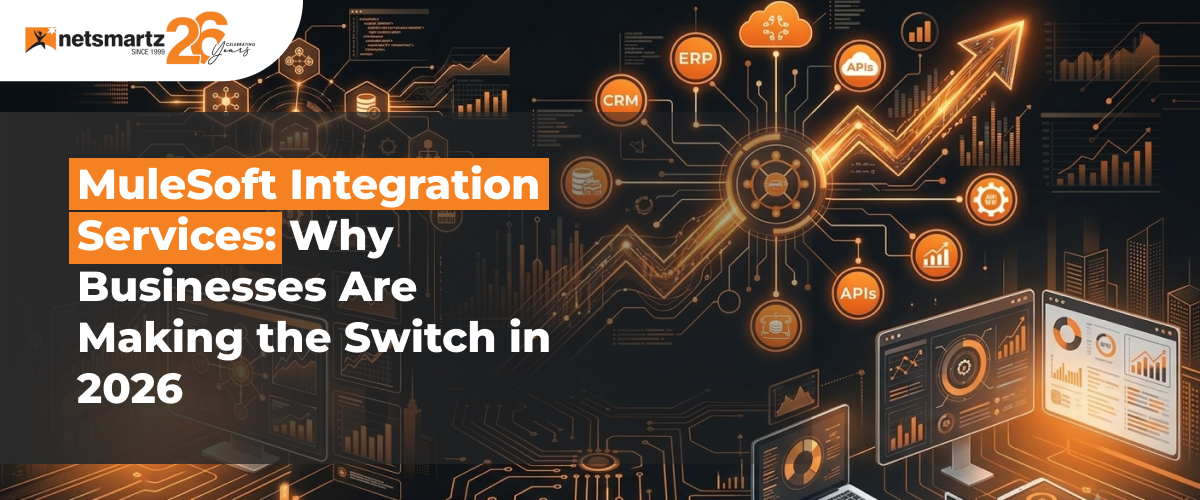
Your Business Runs on Data. But Is Your Data Helping Your Business Move Faster?
Most businesses today are not short on technology. They have tools for sales, customer support, finance, operations, analytics, marketing, and reporting. Over time, every department adopts software that solves a specific need. At first, this works well but then growth happens. More systems get added. More data gets created. Teams begin operating across multiple platforms and slowly realize that information is no longer flowing the way it should.
Customer details exist in one place. Financial data lives somewhere else. Reporting takes longer because teams are collecting information instead of using it. This challenge is pushing businesses to rethink how their systems connect. That is one of the biggest reasons MuleSoft integration services continue gaining attention in 2026. Companies are not investing in integration because it sounds innovative. They are doing it because disconnected systems make everyday work slower than it should be.
Why Integration Has Become a Business Priority
Previously, integration was considered an IT initiative, but now it has a broader impact across all areas of a business. Fast access to information allows fast decision-making and delays in decision-making occur when information cannot be accessed quickly. Fragmented customer data results in inconsistent customer experiences. Independent systems create difficulty in scaling.
Organizations understand that simply adding more software will not increase business productivity. Connected systems produce value, disconnected systems produce additional work. As a result of this new way of thinking, organizations have begun to shift their approach towards digital transformation, often supported by scalable mulesoft development services that enable faster and more reliable system connectivity.
What Is MuleSoft?
MuleSoft is an integration platform that helps businesses connect applications, systems, and data sources across cloud and on-premise environments. Instead of building separate custom integrations every time systems need to exchange information, MuleSoft allows organizations to create reusable APIs that support multiple business needs.
Its core platform, Anypoint Platform, acts as a connection layer between technologies. The idea is straightforward. Build integrations once. Reuse them across different teams, applications, and business processes. This reduces duplication and makes future expansion easier.
Understanding MuleSoft's API-Led Approach
One reason businesses adopt MuleSoft is its structured integration model. Rather than connecting everything directly, integrations are organized into reusable layers.
System APIs
These connect directly to core business systems.
Examples include:
- CRM platforms
- ERP systems
- Databases
- Legacy applications
Their role is to expose information consistently.
Process APIs
This layer handles business logic.
Examples include:
- Customer onboarding
- Order management
- Inventory workflows
- Internal approvals
Process APIs combine information from different sources and make it usable.
Experience APIs
These deliver information to users and channels.
Examples include:
- Mobile applications
- Customer portals
- Internal dashboards
- Partner experiences
This structure makes future development more manageable, especially when organizations focus on data-centric integrations with MuleSoft to ensure consistent and reliable data flow across systems.
5 Reasons Businesses Are Switching to MuleSoft in 2026
1. Data Silos Are Becoming Expensive
Most organizations do not struggle because they lack systems. They struggle because systems operate separately. Departments spend time reconciling information instead of making decisions. MuleSoft helps create a more connected environment where information becomes easier to access and share.
That often leads to:
- Faster reporting
- Better collaboration
- Reduced manual work
- Improved visibility across teams
2. AI Depends on Connected Information
Businesses continue investing in AI capabilities, but AI struggles when data is fragmented across systems. According to McKinsey research, scaling AI requires a strong, governed data foundation where information is connected, reusable, and accessible across the enterprise. Without this foundation, organizations often face inconsistent outputs, limited scalability, and reduced confidence in AI-driven decision-making, which ultimately slows down overall business impact.
3. Legacy Integration Approaches Create More Maintenance
Many businesses still depend on custom scripts and older integration methods. Those approaches may work initially. Over time they become harder to maintain. Updates take longer. Changes create unexpected issues. Modern integration platforms are becoming attractive because they reduce operational effort and support future growth more effectively.
4. Teams Need Faster Delivery
Business requirements change quickly. Organizations cannot afford to rebuild integrations every time priorities shift. Reusable APIs help teams move faster because previous work continues creating value. This approach reduces duplicated effort and shortens future delivery cycles.
5. Governance and Visibility Matter More Than Before
As technology environments expand, businesses want better control over how information moves.
Questions become more important:
- Who can access data?
- Where is information flowing?
- Are standards being followed?
MuleSoft gives organizations more visibility and consistency across integrations. That becomes increasingly valuable as operations scale.
How MuleSoft Compares to Traditional Integration Approaches
Traditional integrations often solve immediate problems. But over time they can become difficult to maintain. MuleSoft focuses more on long-term scalability through reuse and structured architecture.
Businesses often see benefits such as:
- Reduced integration complexity
- Better visibility across systems
- Improved flexibility
- Faster future delivery
- Stronger operational consistency
Is MuleSoft Right for Every Business?
Not necessarily.
Smaller businesses with limited systems may not need enterprise-level integration. But organizations with growing technology environments often benefit from creating stronger connections between systems.
MuleSoft may be especially valuable for:
- Growing enterprises
- Multi-cloud environments
- Salesforce ecosystems
- Digital transformation initiatives
- Businesses preparing for AI adoption
How Businesses Usually Get Started
Most successful integration projects begin in phases.
Review Existing Systems
Understand where information gaps exist.
Prioritize High-Impact Connections
Focus first on areas that influence business outcomes.
Create Reusable Standards
Build integrations that continue delivering value later.
Expand Gradually
Treat integration as an ongoing capability instead of a one-time project.
Final Words
Businesses are not moving toward MuleSoft because integration suddenly became popular. They are making the shift because disconnected systems create real operational challenges. When information moves slowly, teams move slowly. When systems remain disconnected, growth becomes harder.
MuleSoft offers a more structured approach that helps businesses create connected experiences, improve operational visibility, and prepare for future technology investments. For many organizations in 2026, integration is no longer optional. It is becoming part of how modern businesses operate.
"The businesses moving fastest are often the ones where information moves without barriers."
Ready to connect your systems and move faster?
Discover how MuleSoft integration services can help simplify connectivity, improve visibility, and support long-term business growth.
Talk to an expertFrequently Asked Questions
No. Mid-sized businesses with growing system complexity can also benefit from a structured integration approach.
MuleSoft helps connect Salesforce with external systems and allows information to move more efficiently across platforms.
Timelines depend on project scope, business goals, and the number of systems involved.
No. It works alongside existing environments and helps connect them.
Yes. Connected information often improves the quality and reliability of AI-driven processes.
It allows businesses to create reusable connections instead of rebuilding integrations repeatedly.
Ready to build smarter? Let's talk.
Our experts are ready to help you turn ideas into production-ready AI, cloud and digital solutions.
Get In Touch →Let's Discuss Your Growth Strategy
Let's discuss how we can help you accelerate growth, improve efficiency, and drive real business outcomes.