 AI-First Culture
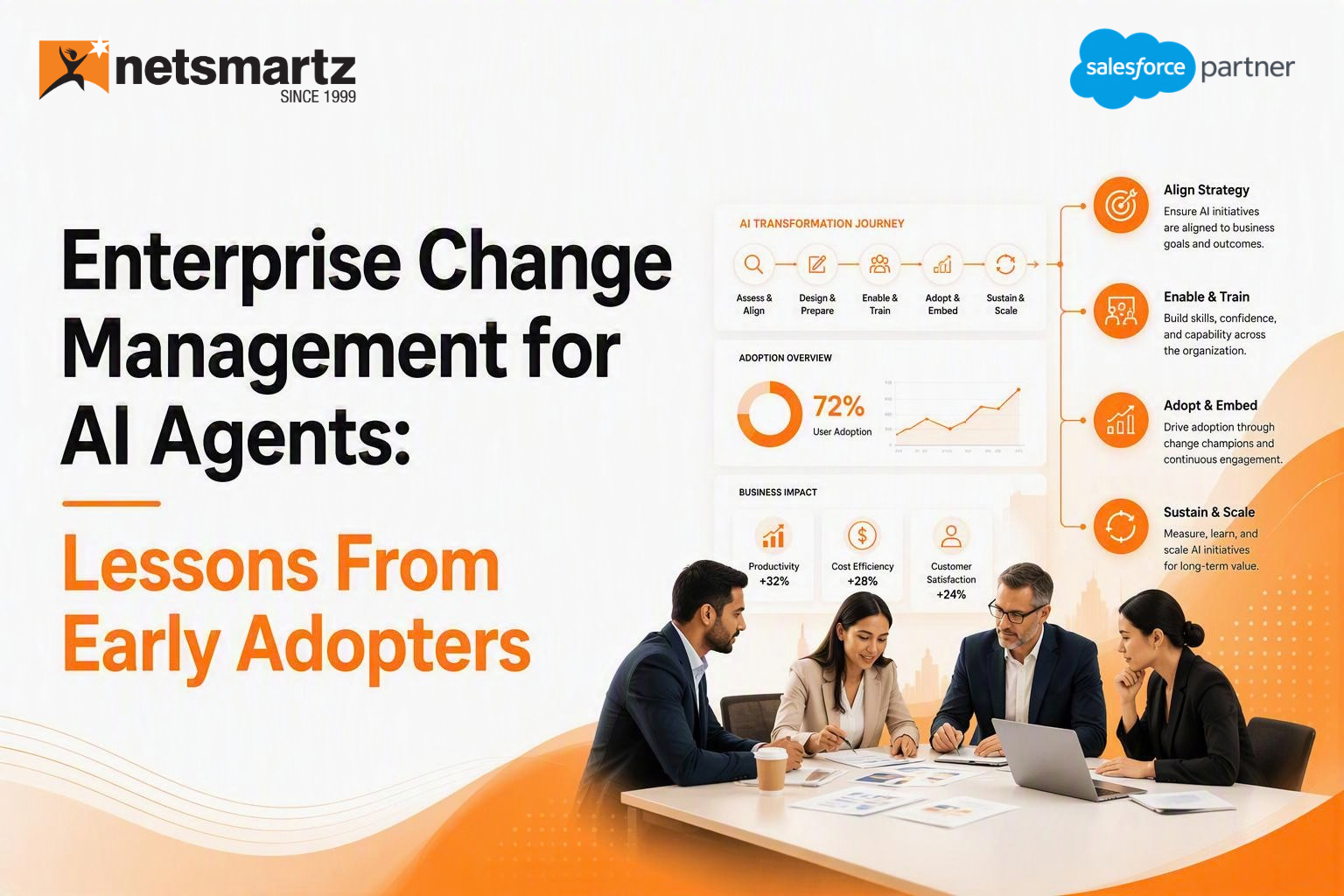
Enterprise Change Management for AI Agents: Lessons from Early Adopters
"The most successful AI implementations aren't about the technology. They're about preparing your people and organization to work alongside intelligent systems. Get that right, and the technology takes care of itself."
AI agents have evolved from experimental initiatives to operational infrastructure across the Middle East and North Africa. Organizations in Dubai's banking sector, Riyadh's healthcare systems, Cairo's retail, and government agencies now manage AI agents at enterprise scale. The technology has delivered on its core promise: 24/7 customer availability, instant decisions, and employees focused on strategic work.
Yet large-scale deployments reveal a critical insight: technology implementation was straightforward. Organizations that achieved measurable success managed organizational change, built institutional trust, and established operational readiness - disciplines separate from engineering. This article captures lessons from leading organizations across the MENA region. A consistent pattern emerges companies that prioritized change management alongside technology deployment scaled faster, captured more value, and avoided implementation failures that derailed competitors.
Why AI Agent Adoption Is Accelerating Across MENA
Growing Pressure to Drive Digital Transformation
In GCC markets such as Saudi Vision 2030 and the UAE's AI Strategy 2031, national AI strategies have moved from frameworks to regulatory requirements and competitive imperatives. Organizations that delayed AI adoption now lag competitors measurably. The gap has widened across customer satisfaction, operational efficiency and time-to-market measures. Staffing levels remain lean after the pandemic, and customer demands for fast responses are increasing. AI agents do routine work that would otherwise take a proportional increase in headcount and create strategic value.
From Automation to Autonomous Workflows
Earlier technologies such as chatbots and RPA worked within a confined set of rules. The current AI agents have the ability to learn about the context, take various factors into account, and act accordingly. Companies that choose to implement Salesforce Agentforce will be able to utilize AI agents to address more intricate processes and execute more complicated business logic than what was possible before.
The Biggest Change Management Challenges Organizations Face
Employee Concerns About AI-Powered Workplaces
Employee concerns about AI are rational. In the MENA region, where employment carries professional and social significance, anxiety runs deep. Without clear early communication about workforce retention and transition, employees default to worst-case assumptions. Change management fails at this point when communication is announced rather than truly conveyed.
Governance and Accountability Questions
When AI systems make important decisions, such as approving credit, flagging potential fraud, or recommending treatments, organizations need to clearly define who is responsible for the outcome. What happens when an AI system makes a mistake? Regulatory requirements can make this even more complex. Financial services may require detailed audit trails, while healthcare organizations need clear accountability and oversight. Governance should therefore be planned and established before AI is deployed, not added later. According to Deloitte's Trustworthy AI Governance in Practice, effective AI governance requires clear accountability, workforce education, and oversight throughout the AI lifecycle.
Organizational Readiness Gaps
Three consistent problems emerge: Data quality issues mean AI systems inherit organizational data problems. Fragmented legacy systems complicate integration and require significant infrastructure investment. Process inconsistencies create AI performance challenges. Organizations must address these before deployment.
What Early AI Adopters in MENA Are Doing Differently
Leading With Business Value, Not Technology
Organizations that achieve measurable results usually start with a business problem rather than a technology decision. They identify specific challenges, such as slow response times, manual processes, or missed sales opportunities. Success is then measured by business outcomes, such as better customer satisfaction, faster processing, improved productivity, or increased revenue, rather than by the sophistication of the technology itself.
Involving Business Teams From Day One
Organizations that involve business teams early in the process often make implementation smoother and faster. Operations leaders, compliance teams, service managers, and HR can provide practical input from the beginning. Cross-functional teams can review decisions, identify potential issues, and make sure governance is built into the process. When employees have a role in shaping the solution, they are more likely to understand the change and support its adoption.
Starting Small Before Scaling
Successful organizations follow disciplined pilots: select specific teams or processes, gather rigorous feedback, measure outcomes, iterate, and scale only after proving the model works. Pilots surface technical issues early, enable employees to adapt in controlled environments, build stakeholder confidence, and create organizational learning for faster subsequent deployments.
Building Trust and Adoption Among Employees
Communicating the Role of AI Agents Clearly
Effective communication specifies exactly what changes rather than making vague statements. For example: "During the 90-day pilot, AI manages password resets and account inquiries. You receive all complex issues requiring judgment. We measure results and share findings." Specificity works because it is testable and verifiable.
Investing in AI Upskilling
Organizations that retained high-performing employees invested substantively in skill development and career pathways. Customer service representatives become AI performance coaches. Data analysts transition into AI performance analysis. Administrative professionals move into operations design roles. When employees see genuine advancement rather than obsolescence, adoption and retention improve significantly.
Maintaining Human Oversight
Successful organizations built human oversight into design from inception. AI handles routine customer inquiries, but complex issues escalate. Financial systems recommend but require human approval above thresholds. Healthcare systems suggest but physicians decide. This human-in-the-loop maintains accountability, provides safety mechanisms, enables organizational learning, and preserves relationships.
A Practical Framework for Enterprise AI Change Management
Assess Organizational Readiness
- People: Does leadership genuinely sponsor this initiative? Is ownership focused on adoption? Do employees understand intentions?
- Processes: Are workflows documented and standardized?
- Data: Is data accurate and complete?
- Governance: Who owns performance? Who monitors bias? Who ensures compliance?
Establish AI Governance Early
Document: What decisions AI makes autonomously? What requires human review? Who has access? What protocols activate when systems fail? Assign clear ownership for performance, bias monitoring, escalation, and compliance. In MENA markets where regulatory frameworks remain under development, build adaptable structures.
Measure Adoption and Business Impact
Define metrics before deployment: adoption rate, productivity gains, business outcomes, employee sentiment, and ROI. Transparent reporting transforms skepticism into confidence. When employees see concrete evidence of value without job losses, adoption improves measurably.
Conclusion
The question is not whether to implement AI agents but how to do so effectively. The answer requires moving beyond technology-centric thinking to embrace comprehensive change management. Organizations that achieved scaling success assessed readiness honestly, established governance proactively, involved business teams substantively, invested in employee development, and measured impact transparently.
The competitive advantage belongs to organizations that implement advanced technology while bringing their entire organization along. Those that help employees understand why change occurs, what it means for roles, and how to succeed in AI-augmented environments will outpace competitors treating this as pure technology deployment. Success depends on thoughtful, human-centered implementation.
Ready to Prepare Your Organization for AI?
Build the right foundation for AI adoption with a practical approach to governance, employee readiness, and Agentforce implementation.
Talk to an AI ExpertFrequently Asked Questions
Treating it as technology rather than organizational change. Equal focus on people, processes, and governance is essential.
Provide specific examples of role evolution. Couple with genuine upskilling investments that create career pathways.
6-12 months with proper change management. Rushing without focusing on people causes 18+ month failures.
Define who owns performance, what decisions AI makes autonomously, escalation processes, and compliance requirements.
Track adoption rates, productivity gains, business outcomes, employee sentiment, and ROI. Report transparently.
Ready to build smarter? Let's talk.
Our experts are ready to help you turn ideas into production-ready AI, cloud and digital solutions.
Get in touch →Let's Discuss Your Growth Strategy
Let's discuss how we can help you accelerate growth, improve efficiency, and drive real business outcomes.