 AI-First Culture
Digital Disruption in Real Estate: Why Legacy CRMs Fail in the Middle East
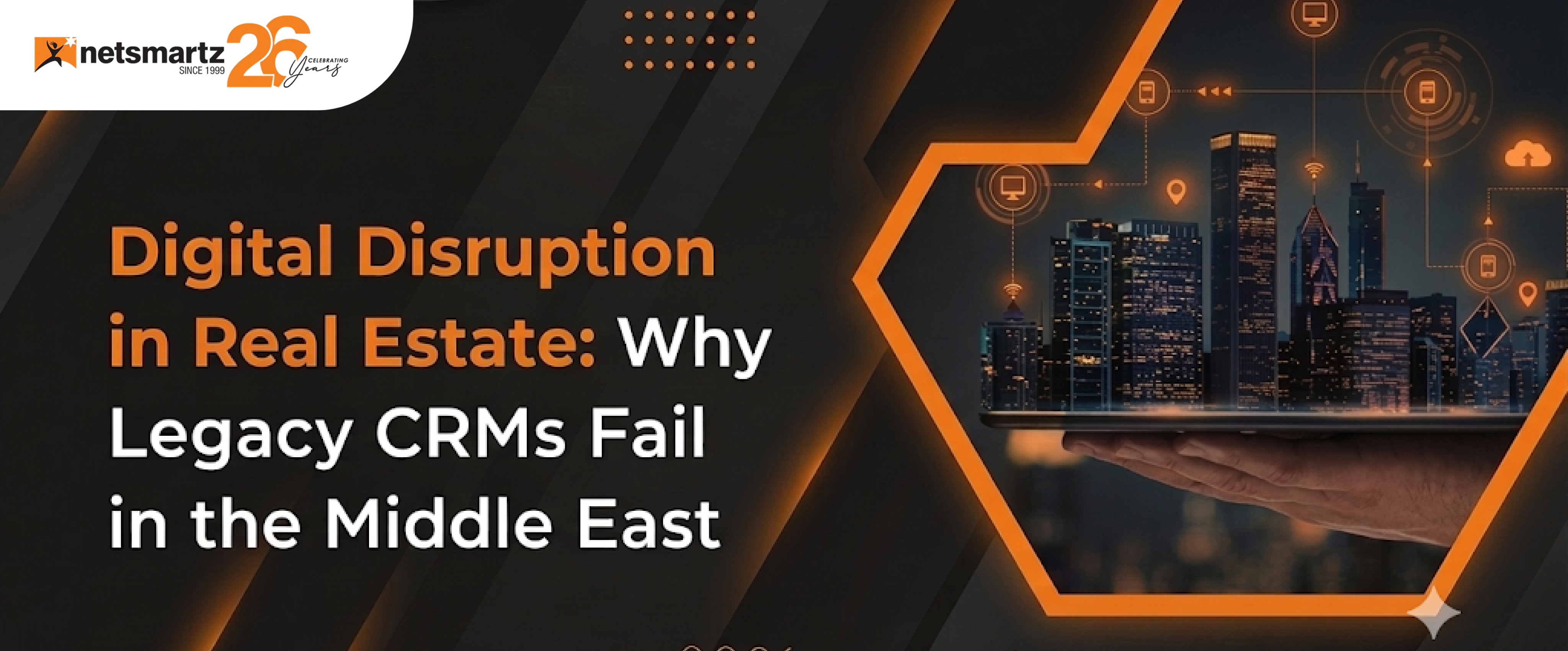
The Middle East real estate market is moving fast. Faster than a lot of organizations expected. Investors are global now. Customers expect digital experiences. The competition is brutal. And a lot of real estate companies are still running CRM systems built ten years ago. Systems that were never designed for this world.
Legacy CRMs aren't failing because technology broke them. They're failing because the business world changed and they didn't adapt. Markets have shifted. Customer expectations have shifted. Competition shifted. Meanwhile, these old systems just sit there doing the same thing they've always done.
That gap between what the market needs and what legacy systems can deliver? That's where the problems start.
What's emerging instead is a shift toward AI real estate CRM platform that can adapt, learn, and scale with the market rather than lag behind it.
What's Actually Changing in Middle East Real Estate
The Middle East real estate market isn't the same as it was five years ago. You've got international investors competing with local players. Buyers are younger and more digitally savvy. They want instant responses. They research online. They expect seamless digital experiences.
Modern buyers are also interacting with platforms powered by Autonomous AI agents in real estate, expecting intelligent responses, real-time recommendations, and always-on engagement.
Transaction volumes are exploding. Listings are multiplying. Data is everywhere. Managing this volume with manual processes and old systems doesn't work anymore. You need technology that scales. Technology that keeps up with speed.
Regulations are tightening. Compliance requirements are more complex. Tax implications are intricate. Old CRMs weren't built for this regulatory environment. They're basic record-keeping systems in a world that demands intelligent compliance management.
Why Legacy CRMs Specifically Struggle Here
They Move Slowly
Adding new features? Takes months. Integrating with new platforms? Nightmares. Your market is moving fast. Your system is moving slowly. That mismatch costs deals.
They're Not Built for Mobile
In the Middle East, most customers are mobile-first. They want to browse properties on their phone at midnight. They want to schedule viewings from their car. Legacy CRMs treat mobile like an afterthought. That's a competitive disadvantage.
Data Is Fragmented
Customer information, property data, and transaction history are all disconnected. Your team wastes time pulling data from multiple places instead of having one unified view. That inefficiency costs time and money.
They Don't Integrate with Modern Tools
Marketing platforms, analytics tools, AI solutions, and payment systems—legacy CRMs struggle to talk to anything modern. You end up managing multiple disconnected systems instead of one unified platform. This becomes even more critical as the industry accelerates toward AI adoption in Middle East real estate, where organizations are rapidly experimenting with intelligent systems, yet many still operate on fragmented tech stacks that cannot support AI-driven workflows at scale.
In contrast, an AI real estate CRM connects these systems seamlessly and enables smarter decision-making.
Key Challenges
Speed Problem
Legacy systems can't keep pace with market velocity. Customers want instant responses. Your system can't deliver that.
Integration Problem
Modern tools don't talk to old systems. You're stuck managing disconnected platforms and manual workarounds.
Scalability Problem
Adding volume exposes limitations. Systems that worked for 100 properties break at 1,000 properties.
User Adoption Problem
Your team hates using outdated systems. Bad UX means they find workarounds. Workarounds mean data quality issues.
What Actually Happens When You Modernize
Administrative Work Disappears
Teams stop wasting time on manual data entry. Information syncs automatically. Workflows automate. People focus on actual business development instead of administrative busy work.
Customer Experience Improves
Customers get better experiences. Instant responses, personalized interactions, seamless digital journeys. That improves satisfaction and loyalty.
Sales Cycles Accelerate
Your team has complete information instantly. Deal progression moves faster. You close more deals in less time.
Data Quality Improves Dramatically
When information lives in one system and syncs properly, accuracy increases. Your decisions are based on reliable data instead of fragmented, outdated information.
Integration Becomes Possible
Modern platforms connect to everything you need. Marketing automation, analytics, payment processing, AI tools. Everything works together instead of fighting each other.
The Real Cost of Staying with Legacy
Opportunity Cost
Opportunity cost is the big one. Every deal you lose to faster competitors. Every customer that goes somewhere with a better digital experience. That's the revenue you're leaving on the table.
Productivity Cost
Productivity costs are real. Your team spends time on workarounds instead of selling. That's expensive labor doing expensive work that shouldn't need to be done.
Recruitment & Retention
Recruitment and retention suffer. Good talent wants modern tools. If you're still running legacy systems, younger professionals won't want to work for you. That limits your hiring options.
Security & Compliance Risk
Risk increases. Legacy systems have security vulnerabilities. Data is less protected. Compliance is harder to manage. Audit trails are weaker. That's a business risk.
How to Actually Transition
Don't Try to Switch Everything Overnight
That's how migrations fail. Start with your most critical workflows. Get those working properly. Then expand to other areas. A phased approach works better than a big bang migration.
Your Team Needs Training
Real training. Not a two-hour overview. Hands-on, ongoing education. Good tools with bad adoption deliver zero value.
Data Migration Matters More Than Most People Think
Garbage data is a bigger problem than no data. Clean your data before you move it or you're importing problems into your new system.
Plan for Change Management
This isn't just a software switch. It's how your team works. Involve people early. Listen to their concerns. Help them see the benefits. Buy-in matters.
Conclusion
Digital disruption in Middle East real estate isn't theoretical. It's happening now. Organizations with modern systems are winning deals. Organizations clinging to legacy systems are losing. The gap widens every quarter.
Staying with legacy CRMs isn't conservative. It's risky. The market is moving and you're standing still. That's not a sustainable position. Eventually, you get run over.
Modern real estate businesses don't compete on listings alone. They compete on speed, connectivity, and the ability to turn data into action.
Ready to modernize your real estate technology?
Get expert guidance on your CRM strategy. We'll help you assess your current setup and plan a transition that actually works for Middle East real estate.
Frequently asked questions
Market velocity is higher. Customer expectations are higher. The competition is fiercer. Legacy systems can't keep pace. Modern platforms designed for speed, integration, and scale handle this environment better.
Opportunity cost from lost deals. Productivity loss from manual workarounds. Recruitment challenges from poor tools. Security and compliance risk. Add it up and it's significant.
Depends on complexity and data volume. Simple setups might take 2–3 months. Complex enterprise migrations with heavy customization can take 6+ months. A phased approach usually works better than one big migration.
Yes, if you plan properly. A phased rollout means you migrate to one workflow at a time. Some disruptions are unavoidable, but good planning minimizes it. Your team keeps operating while systems transition.
Speed, integration capability, mobile-first design, automated workflows, data synchronization, reporting intelligence, and mobile accessibility. Look for platforms built around AI and autonomous agents for future-proofing.
AI agents automate lead qualification, provide instant customer responses, predict deal outcomes, manage commission tracking, and reduce manual coordination. They enable 24/7 engagement while allowing your team to focus on relationship building instead of administrative work.
Ready to build smarter? Let's talk.
Our experts are ready to help you turn ideas into production-ready AI, cloud and digital solutions.
Get In Touch →Let's Discuss Your Growth Strategy
Let's discuss how we can help you accelerate growth, improve efficiency, and drive real business outcomes.