 AI-First Culture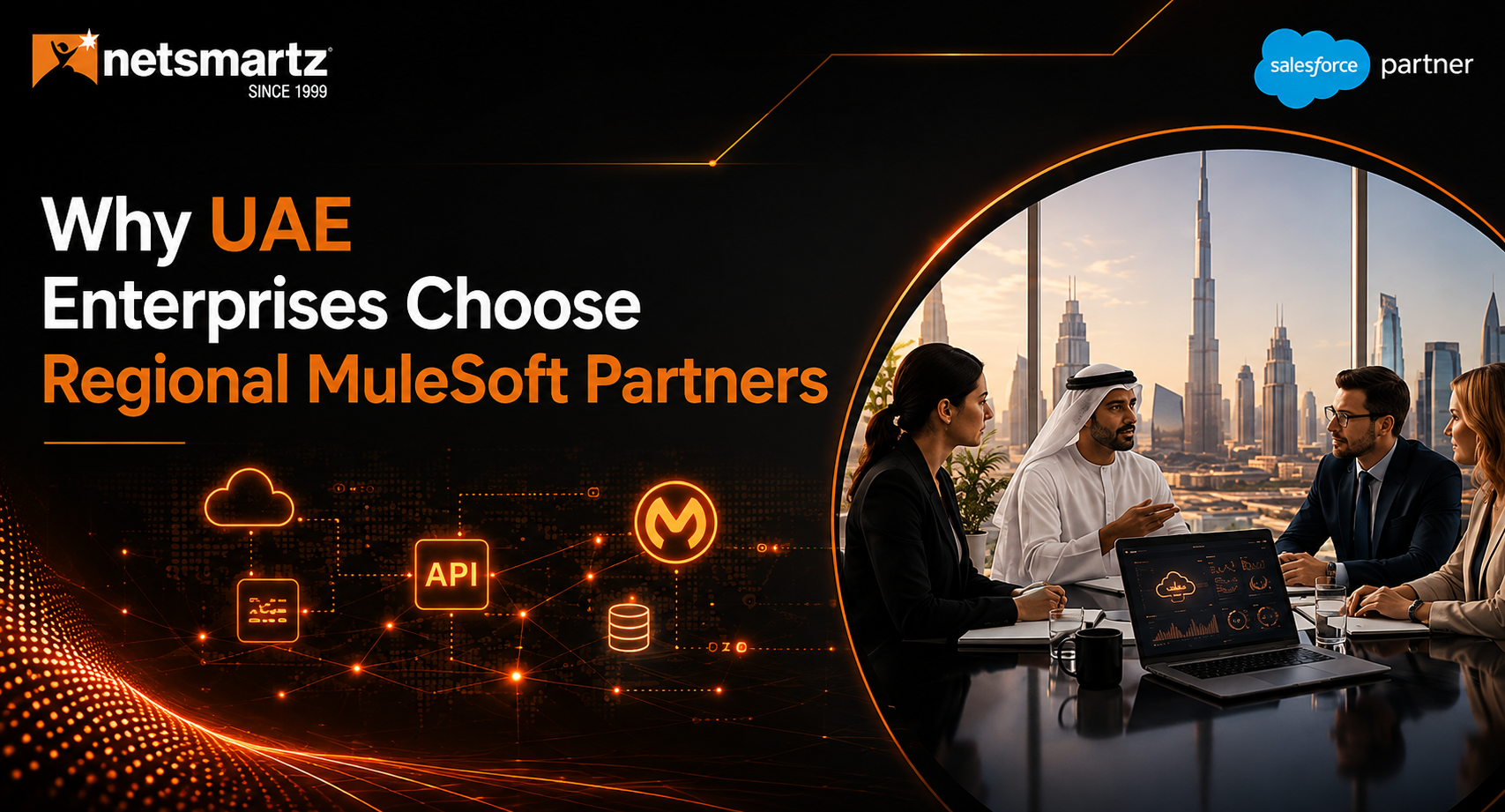
"The right implementation partner does not just install a platform. It makes sure the platform still works the way you need it to a year after the invoice is paid."
Choosing MuleSoft as your integration platform is the easy part of this decision. The harder question, the one that actually determines whether the project succeeds, is who implements it. A MuleSoft license gets you the software. It does not get you integration mapping tailored to your systems, custom connectors for UAE specific platforms, or a support team that answers in your working hours instead of eight time zones away. That is the gap MuleSoft partner UAE enterprises choose is meant to close, and in 2026, more procurement teams are realizing that a regional partner closes it faster and more completely than an offshore global SI.
This is not a loyalty argument. It is an operational one. A global systems integrator can absolutely build a working MuleSoft deployment, and for a multinational rollout spanning a dozen countries at once, that scale can genuinely be the right fit. What a global SI typically cannot offer in a UAE specific engagement is same day, same time zone incident response, hands on familiarity with UAE regulatory systems like the Federal Tax Authority and Dubai Land Department, or a support contract that does not route every urgent ticket through a follow the sun queue passing between three continents before someone actually picks it up. Those differences show up most clearly after go live, exactly when a global SI's engagement usually starts winding down and a regional partner's real value begins.
What a MuleSoft Implementation Actually Requires Beyond the License
A MuleSoft subscription is infrastructure, not a finished solution, in the same way a plot of land is not a finished building. Getting real value out of it requires a specific set of ongoing work that a license alone does not include, and this is exactly where the choice of implementation partner starts to matter more than the choice of platform itself.
- Integration mapping between every system that needs to talk to every other system, from ERP and CRM to regulatory reporting platforms
- Custom connector development for local or industry specific systems that do not have an out of the box MuleSoft connector
- Ongoing governance to keep APIs documented, versioned, and secure as more teams start building on top of the same integration layer
- Post go live support that catches issues before they become outages, not after a customer complains
Netsmartz's MuleSoft Centre of Excellence is built to cover all four together. Our team holds 150+ active MuleSoft certifications across the Anypoint Platform stack, and clients working with our APIOps pipeline have seen up to 40% faster API delivery and 60%+ automation coverage, combining regional account presence with the platform depth of a certified Salesforce partner rather than treating implementation and support as two separate vendors.
Global SI vs Regional Partner: What Changes
The comparison below breaks down where a regional MuleSoft consulting UAE partner tends to outperform a global systems integrator, and where the differences actually show up in day to day operations.
| Factor | Global SI | Regional Partner |
|---|---|---|
| Time zone and support responsiveness | Tickets often route through a follow the sun model, adding hours to response time for urgent issues raised during UAE working hours. | In country teams working the same hours as your business, meaning a critical issue gets a same day response rather than an overnight wait. |
| Regulatory and data residency familiarity | General awareness of GCC regulation, but rarely hands on experience with specific UAE frameworks like PDPL or DIFC Regulation 10. | Built in familiarity with UAE PDPL, DIFC data protection rules, and sector specific requirements from active local project work. |
| Local system integrations | Limited or no prior experience connecting MuleSoft to UAE specific platforms like FTA e-invoicing infrastructure or DLD linked systems. | Direct experience building connectors for systems like FTA's e-invoicing mandate and DLD linked property data feeds. |
| Cost structure and contract flexibility | Often structured around large, fixed scope engagements with limited flexibility once the contract is signed. | Typically more flexible engagement models, scaling support up or down as integration needs change post go live. |
Questions to Ask a Potential MuleSoft Partner
Before signing with any MuleSoft implementation partner Dubai based or otherwise, these questions should have specific, verifiable answers, not marketing language.
- Can you show two or three past MuleSoft deployments for UAE or GCC based enterprises, and can we speak with those clients directly?
- What is your support SLA for critical incidents, and is that support delivered from an in country team or routed offshore?
- Do you have hands on experience integrating with FTA e-invoicing infrastructure or DLD linked systems specifically?
- What does your post go live support model actually include, and for how long after launch?
- How do you handle data residency and hosting for regulated data under UAE PDPL or sector specific rules?
- What happens if our integration needs grow six months after go live, does the contract flex or do we renegotiate from scratch?
What Good Regional Partner Support Looks Like Post-Go-Live
The real test of a MuleSoft partner is not the go live date, it is what happens in the months after. Good regional support looks like proactive monitoring that flags an API performance issue before it causes downstream failures, incident response measured in hours rather than days because the support team works your time zone, and a governance model that keeps documentation current as new integrations get added rather than letting technical debt pile up silently. It also looks like a partner who shows up for quarterly reviews without being chased, flagging upcoming regulatory changes such as the FTA's e-invoicing rollout before they become a scramble rather than after. Gartner's guidance on evaluating and selecting systems integrators treats vendor selection as a critical, structured evaluation criterion alongside technical capability. Support model and post-implementation relationship are explicitly part of those criteria, not an afterthought bolted on after the contract is signed.
Conclusion
The platform decision and the partner decision are not the same decision and treating them as one is where most MuleSoft implementations run into trouble. A local system integration partner GCC enterprises can reach during business hours, with hands on FTA and DLD experience and a flexible post go live support model, consistently closes gaps that a global SI structurally cannot. The license gets you the platform. The right MuleSoft partner UAE enterprises actually trust is what gets you the outcome.
Ready to build a MuleSoft integration strategy tailored to the UAE market?
Connect with Netsmartz’s regional MuleSoft experts to assess your integration needs, compliance requirements, and long-term support.
Frequently Asked Questions
A MuleSoft implementation partner designs integration architecture, builds custom connectors, configures the platform, and provides ongoing governance and support after go-live.
Cost varies significantly based on the number of systems being integrated, custom connector complexity, and the level of ongoing support required, so most partners provide a scoped quote after an initial assessment.
For UAE-specific regulatory and system integrations, a partner with in-country account presence is typically faster to respond and more familiar with local requirements, though larger global SIs may suit multinational rollouts spanning many regions at once.
Common examples include FTA e-invoicing infrastructure, DLD-linked property systems, and sector-specific compliance platforms depending on the industry.
Most regional partners offer ongoing support contracts rather than a fixed end date, since integration needs and API governance continue evolving well after launch.
Ready to build smarter? Let's talk.
Our experts are ready to help you turn ideas into production-ready AI, cloud and digital solutions.
Get in touch →Let's Discuss Your Growth Strategy
Let's discuss how we can help you accelerate growth, improve efficiency, and drive real business outcomes.