 AI-First Culture
Profitable on Paper, Broke in Practice: The Truth About Construction Project Profitability

The Problem Nobody Sees Until the Forecast Changes
Margin erosion usually begins weeks before anyone sees it in a forecast. By the time cost reports reflect the change, recovery options are often limited.
Imagine a $15 million commercial office buildout appeared to be performing as planned. Labor costs were close to budget, procurement commitments aligned with the estimate, and the project manager forecast an 8% margin. Then the monthly WIP review exposed a different picture. A subcontractor invoice exceeded the committed value by $340,000.
Additional work had been completed before related change orders were approved, while declining labor productivity had yet to influence the financial forecast. Individually, these issues seemed manageable. Together, they significantly reduced the project's expected margin.
This is why construction project profitability remains difficult to protect. Profitability erodes as operational, commercial, and financial information falls out of step, leaving leadership to respond after margins have already started slipping.
The Hidden Reasons Construction Projects Lose Money
Project profitability rarely declines because of one major event. It slips gradually as project execution moves faster than financial reporting. Costs emerge at different times, commercial decisions lag field activity, and forecasts rely on incomplete information. Individually, these gaps seem manageable. Together, they create a distorted view of project performance.
Research Insight
According to Autodesk's 2024 State of Data report, conducted with Deloitte Access Economics, 62% of the data construction companies collect is never used for decision-making. The challenge isn't collecting more information; it's connecting project and financial data before margins begin to erode
Delayed Cost Visibility Masks Real Project Performance
Project execution happens daily, but project costs reach finance at different times. Labor appears after payroll, material costs after supplier invoices, and change order revenue only after commercial approval.
Typical reporting delays include:
Labor costs after payroll processing
Material costs after supplier invoicing
Change order revenue after formal approval
That timing gap leaves project teams making labor, procurement, and overtime decisions without complete financial context. Margin erosion can continue before the impact appears in project reporting.
Labor Productivity Declines Don't Register Until Late
Labor productivity usually declines gradually rather than suddenly. Material shortages, rework, weather, and out-of-sequence work reduce output long before job costing reflects the variance.
Common causes include:
Material shortages
Rework
Site congestion
Weather delays
Out-of-sequence work
Timecards record hours worked, not work completed. By the time productivity issues appear in a WIP review, hundreds of additional labor hours may already have been committed.
Fragmented Systems Create Forecasting Blind Spots
Forecast accuracy depends on how current the underlying data is. Yet project schedules, procurement commitments, payroll, subcontractor invoices, and change orders all update on different timelines.
When these timelines don't align, cost-to-complete forecasts reflect reporting cycles rather than actual project performance.
Subcontractor Costs Arrive Too Late
Subcontract commitments establish the budget, but the final cost often changes as projects progress. Acceleration, extended durations, site conditions, and commercial claims frequently surface after the work has been completed.
Late cost adjustments commonly include:
Extended project durations
Acceleration costs
Site condition claims
Commercial settlements
When these costs arrive late, they reduce both forecast accuracy and the opportunity to recover margin.
Change Orders Disappear into the Project
Construction teams often complete additional work before commercial approvals are finalized. Costs are recognized immediately, while revenue follows only after the change order is approved.
The sequence is familiar:
Additional work is requested.
The work is completed.
Costs are incurred.
Approval is delayed.
Revenue is recognized.
Extended approval gaps create less reliable profitability forecasts and make commercial recovery more difficult.
How High-Performing Contractors Protect Project Margins
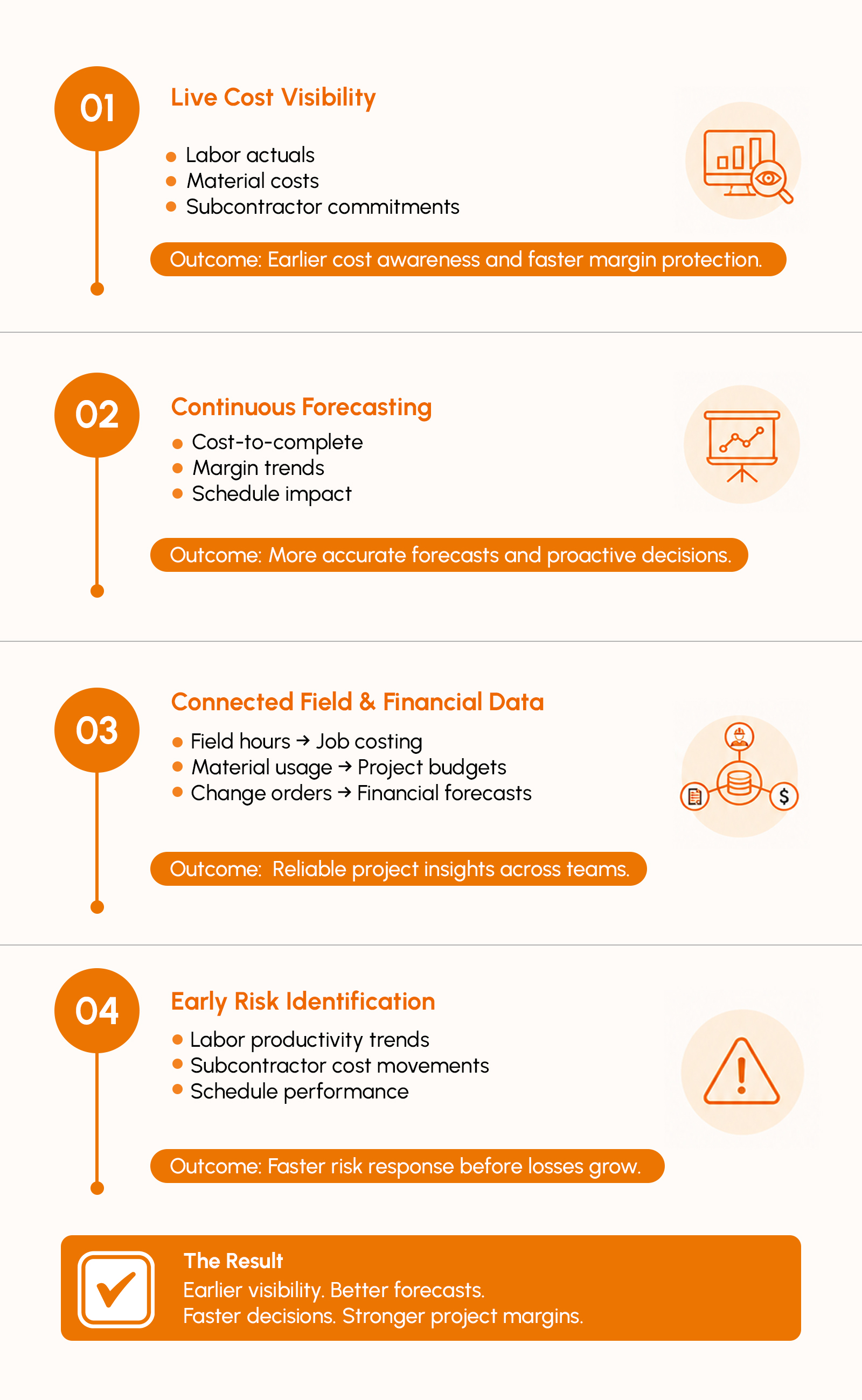
Four practices that help contractors identify risks earlier and make better project decisions.
The Real Bottom Line
Construction profitability is shaped by decisions made throughout the project lifecycle. Labor, procurement, subcontractors, and change management influence margins long before those impacts appear in financial reports.
Connected construction management solutions help close the gap between project execution and financial visibility. By bringing operational data, job costs, forecasts, and commercial information together, they help teams identify cost risks earlier, improve forecast accuracy, and make better decisions while projects are still in progress.
The contractors that consistently protect margins are those that turn project information into timely action.
Want to improve project visibility and protect your margins? Contact us To learn how connected construction management solutions can help your business make faster, more informed decisions.
Frequently Asked Questions
Construction companies often discover project losses after costs have already accumulated because financial visibility does not always keep pace with project activity. Labor productivity issues, subcontractor overruns, delayed change orders, and procurement costs may remain hidden until they appear in job costing or WIP reviews. By that stage, project teams often have fewer options to recover lost margins.
Construction projects can appear profitable while hidden cost pressures continue to build. Common causes include inaccurate cost-to-complete forecasts, delayed subcontractor costs, unapproved changes, labor productivity declines, and disconnected field and financial data. These issues gradually reduce margins because the financial impact becomes visible after key project decisions have already been made.
Labor hours show how much time crews spend on a task. Labor productivity shows how effectively those hours translate into completed work. A project can remain within its planned labor hours early on while productivity declines due to rework, material delays, site conditions, or inefficient sequencing. Tracking productivity trends helps contractors identify labor cost risks before they significantly impact margins.
Disconnected systems create gaps between what happens on the jobsite and what appears in financial reports. Field teams may have current information about progress and challenges, while finance works from delayed cost data. This disconnect affects job costing accuracy, forecasting, change order management, and the ability to identify margin risks early.
Project profitability forecasts should be reviewed regularly throughout the project lifecycle, especially for complex or high-risk projects. Effective forecasting includes current costs, commitments, productivity trends, pending changes, and updated cost-to-complete estimates. Frequent reviews help contractors identify margin pressure earlier and make adjustments while the project is still active.
Keep reading

Is Your Legacy Construction ERP Ready for What Comes Next? 5 Signs It Isn't

2,975 Aussie Builders Couldn't See It Coming: Why Accounting Software Isn't Enough for Project Visibility
Siloed Sites, Broken Data: Why Construction Tech Stack Integration Is Broken
Ready to build smarter? Let's talk.
Our experts are ready to help you turn ideas into production-ready AI, cloud and digital solutions.
Get In Touch →Let's Discuss Your Growth Strategy
Let's discuss how we can help you accelerate growth, improve efficiency, and drive real business outcomes.