 AI-First Culture
Why Construction Project Costs are Hard to Catch Before They Blow the Budget
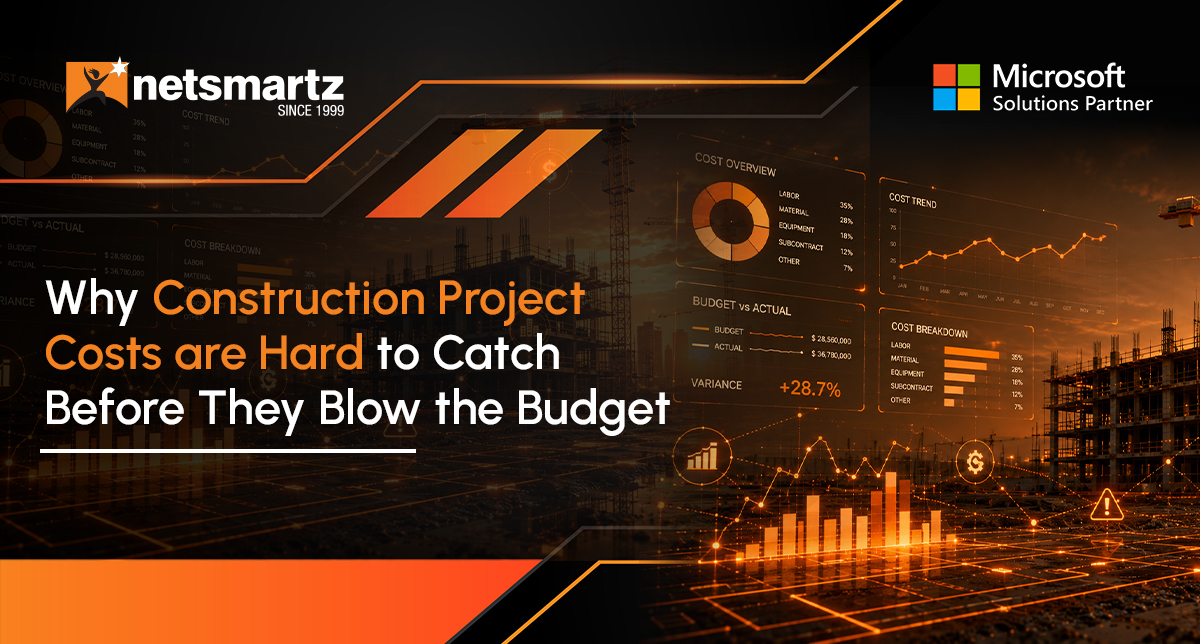
It's 2 PM on Wednesday in Abu Dhabi. A CFO is in a project review meeting with the operations team. Someone asks a simple question: What's the actual cost position of the mixed-use development that started six months ago?
The project manager shares one figure. Finance reports another. Procurement points out that several invoices haven't yet been posted. No one is deliberately withholding information, but no one has a complete picture either.
This scene plays out in construction companies across the UAE every day. The data exists. It just isn't connected. Project costs, procurement, payroll, subcontractor claims, and financial data are often spread across legacy ERP systems, spreadsheets, project management tools, and manual workflows. By the time finance brings everything together, the numbers have already changed.
Autodesk's 2024 State of Data Capabilities in Construction report found that 62% of the construction data companies collect and analyze is never used to make business decisions. The challenge isn't collecting more information. It's connecting project delivery and finance quickly enough to make confident decisions while work is still underway.
For construction companies across the UAE, every delay in financial visibility reduces the time available to respond. Cost variances grow, cash flow becomes harder to manage, and project margins come under increasing pressure.
To understand the problem, we need to look beyond the numbers and examine how information flows across a construction business.
Why Visibility Breaks Down
The visibility gap doesn't begin in the finance department. It begins with how project information moves across the business.
On a typical UAE construction project, cost data is generated across multiple systems. Site teams record labour hours. Procurement tracks material purchases. Equipment costs come from separate operational records. Subcontractors submit progress claims. Finance manages invoices, payments, VAT, and financial reporting. Each team captures information for a different purpose, often using different tools.
It's one reason many contractors begin evaluating construction management software in the UAE. The challenge isn't the volume of data. It brings financial and operational information together quickly enough to support informed decisions.
Without effective construction finance data integration, finance and project teams continue working with different versions of the same project. Too much time is spent validating numbers before decisions can be made.
The Reconciliation Burden Nobody Budgets For
Month-end doesn't create the visibility problem; it exposes it.
What should be a routine financial close often turns into an investigation. Finance teams spend valuable time reconciling project costs, validating commitments, reviewing payroll allocations, and resolving timing differences before they can trust the numbers.
Many of those differences are small in isolation. A subcontractor’s claim is approved on site but hasn't reached finance. Materials are delivered before the supplier invoice arrives. Labour costs are processed in payroll before they're allocated to a project. Individually, these are everyday operational events. Collectively, they slow financial reporting and reduce confidence in project data.
For contractors managing multiple projects across different emirates, this reconciliation effort consumes time that should be spent analyzing project performance, identifying emerging risks, and advising the business. Instead of supporting decisions, finance is occupied with validating information.
When reports are finally ready, the opportunity to respond may already have narrowed. Cost variances have grown, cash flow assumptions have shifted, and protecting project margins becomes far more difficult.
How Delayed Visibility Leads to Project Cost Overruns in GCC Construction
Delayed visibility affects more than reporting. It can lead to:
Late identification of budget variances, allowing small overruns to grow before corrective action is taken.
Inaccurate cash flow forecasts make it harder to plan payments, manage working capital, and maintain liquidity.
Delayed recognition of change order impacts affects both project profitability and client billing.
Procurement decisions based on outdated cost information increasing the risk of overspending.
Reduced confidence in project forecasts, forcing finance teams to spend more time validating data than analysing performance.
Margin erosion, as rising labour, material, and subcontractor costs are identified only after they've affected the project's financial position.
For projects involving multiple subcontractors, phased billing, retention, and ongoing design changes, these challenges become even more difficult to manage. Real-time visibility gives finance enough time to respond while the project is still moving, not after the reporting cycle is complete.
What Leading Construction Firms Do Differently
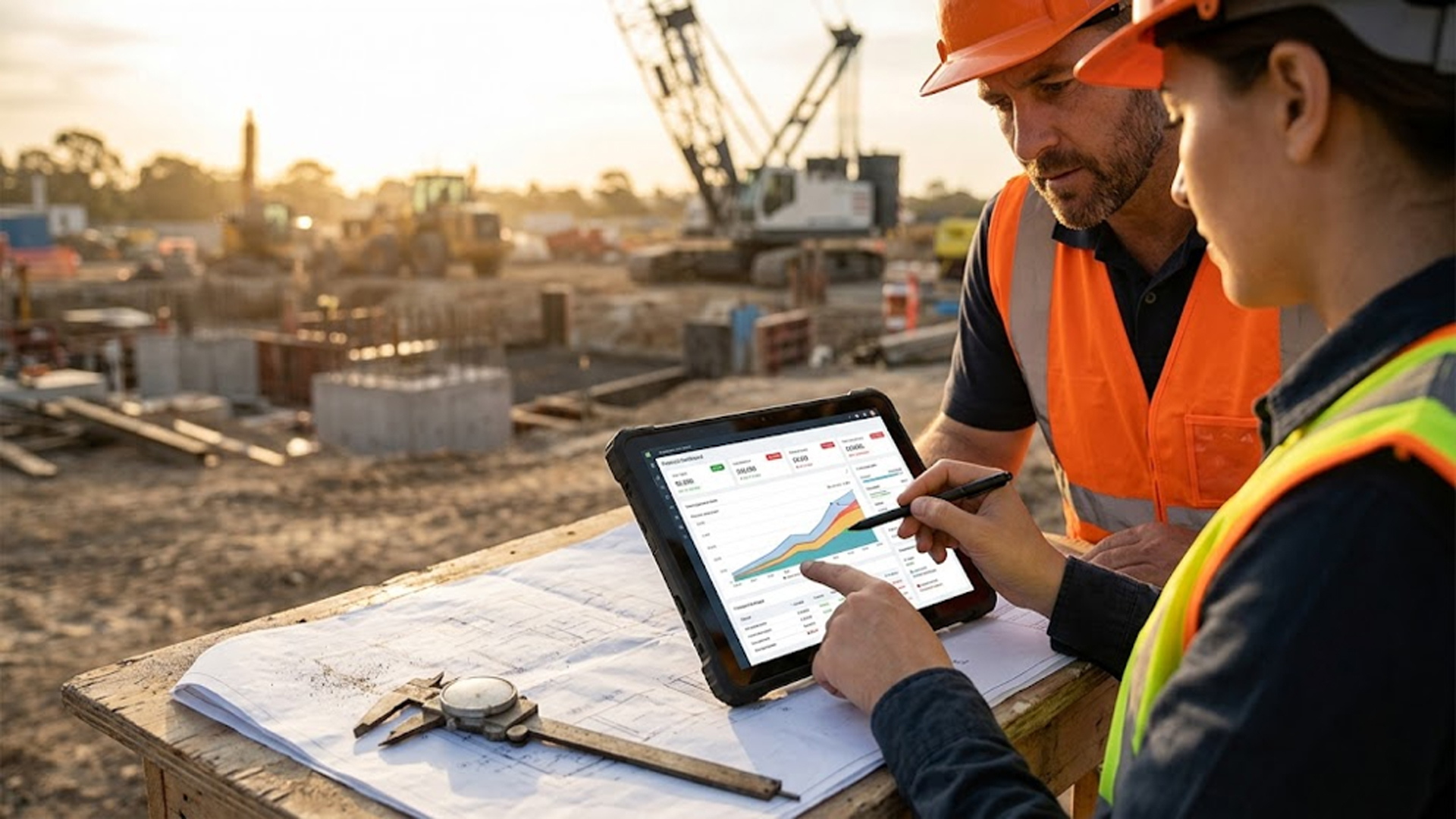
The conversation around project visibility often starts with software. In reality, the biggest improvements usually come from changing how financial and project information flows through the business.
One pattern stands out among contractors that consistently deliver reliable project reporting. They don't treat visibility as a finance initiative or an IT project. They treat it as an operational discipline supported by technology.
They Standardize How Project Data Reaches Finance
Most visibility issues don't begin during month-end close. They begin weeks earlier, when labour hours are approved differently across projects; subcontractor claims arrive without consistent cost coding, or purchase commitments aren't reflected until invoices are received.
Finance teams can't report accurately if project information enters the system inconsistently.
Leading contractors establish common cost structures, standard approval workflows, and clear timelines for submitting timesheets, purchase orders, and subcontractor claims. The objective isn't to create more processes but to reduce the number of exceptions finance has to investigate every month.
They Don't Wait Until Month-End to Understand Project Performance
One misconception is that better reporting comes from faster month-end closing. It doesn't. Most cost overruns don't happen during month-end. They were simply discovered then.
Finance leaders who have stronger control over project performance review committed costs, labour productivity, procurement commitments, subcontractor claims, and forecast movements throughout the month. Weekly reviews make it easier to identify unusual cost trends while there is still time to respond, instead of explaining them weeks later.
That shift changes the role of finance. Instead of validating history, finance becomes part of the decision-making process while projects are still in progress.
They Invest in Technology That Connects the Business
Most finance teams eventually reach a point where better processes alone are no longer enough. As project portfolios grow, manual handoffs between finance, procurement, payroll, and project management become increasingly difficult to manage. Every additional spreadsheet, disconnected application, or manual data transfer creates another opportunity for delays and inconsistencies.
This is why many contractors across the UAE are moving toward construction management software that connects project management, job costing, procurement, subcontract management, payroll, and financials within a single environment. Instead of waiting for information to move between separate systems, finance and project teams work from the same project data.
The benefit goes beyond faster reporting. Connected project and financial data enable earlier identification of cost variances, more reliable forecasting, and better-informed commercial decisions while projects are still underway.
A Different Way to Think About Visibility
Construction finance doesn't need every number to update every minute.
It needs enough visibility to answer the questions that matter before decisions are made.
Are labour costs tracking against budget?
Have committed costs changed the project's forecast margin?
Which projects are creating cash flow pressure?
Are change orders reflected before progress billings are submitted?
When finance can answer those questions with confidence, project reviews become less about reconciling numbers and more about managing performance.
That's where modern construction management software creates the greatest value. It doesn't replace financial discipline or good project controls. It supports them by giving finance and operations access to the same information, at the right time, to make better decisions.
The Bottom Line
The next time a CFO asks, "What's the actual cost position of this project?", the conversation shouldn't begin with reconciling numbers from multiple systems. It should begin with deciding what action to take.
That's only possible when finance, project management, procurement, payroll, and site teams are working from the same, up-to-date project information. As projects become larger and more complex, relying on disconnected systems and manual reconciliation makes timely decision-making increasingly difficult.
For construction companies across the UAE and GCC, having clear project visibility is critical to controlling costs, improving decision-making, and delivering projects on time. Investing in construction management software that connects financial and operational data helps finance teams move beyond reporting historical performance to managing projects with greater confidence, control, and accuracy.
FAQs
Construction finance teams often work with data spread across accounting systems, project management tools, spreadsheets, and manual processes. Without connected data, project costs, labour, procurement, and subcontractor information take time to reconcile, making real-time project tracking difficult and delaying financial decisions.
The right construction project visibility software in the UAE should connect finance, job costing, procurement, payroll, subcontract management, and project operations. A single source of project data helps finance and operations work from the same information, reducing manual reconciliation and improving reporting accuracy.
Many project cost overruns develop gradually when cost changes aren't identified early. Construction management software helps finance teams monitor budgets, committed costs, subcontractor claims, and labour costs throughout the project, enabling faster decisions before issues affect profitability.
Effective construction finance data integration ensures project and financial information flows between teams without manual intervention. For contractors operating across the MENA region, this improves reporting consistency, supports better forecasting, and gives finance leaders greater confidence in project performance.
Yes. Better project visibility starts with consistent processes, standard cost structures, and regular financial reviews. However, as projects become more complex, many contractors adopt integrated construction management software to connect project operations and finance without relying on disconnected systems and spreadsheets.


Ready to build smarter? Let's talk.
Our experts are ready to help you turn ideas into production-ready AI, cloud and digital solutions.
Get in touch →Let's Discuss Your Growth Strategy
Let's discuss how we can help you accelerate growth, improve efficiency, and drive real business outcomes.