 AI-First Culture
Why U.S. Businesses Choose Kubernetes Experts for Cloud-Native DevOps Transformation
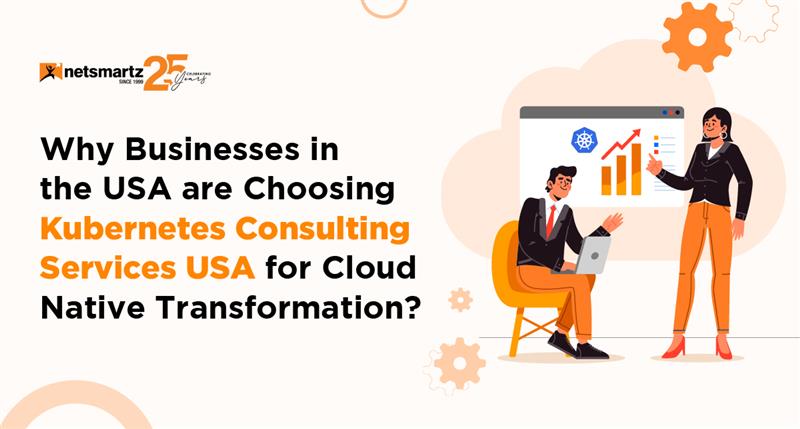
In the recent fast moving tech environment, US organizations are increasingly investing in Kubernetes consulting services USA to power the cloud-native DevOps journeys. For all the CTOs, Cloud Architects and the tech leaders, observing what is driving the surge and how the expertise Kubernetes consulting and services USA can assist- is important while shaping the technology strategy.
What is Driving the Shift to Kubernetes + Cloud-Native DevOps?
1. Increased Demand for scalable, resilient infrastructure of the organization
While traffic spikes or the new additional feature rollouts are often, organizations must depend on the infrastructure that can scale automatically, tackle failures, and recover fast. Container orchestration with Kubernates form such capabilities- but most of the organizations do not have the internal expertise to design, configure and function depend. This is where Kubernetes consulting firms in the USA become expensive.
2. Rapid Innovation and delivery cycles
Cloud-native consulting services aim for continuous integration, continuous delivery, and rapid iteration. Cloud-native DevOps means delivering features, patching vulnerabilities, and deploying code more frequently. Kubernetes and its orchestration of containers underpin the architecture for this speed—but without good consulting help, deployments risk being brittle, insecure, or inefficient.
3. Operational cost control and efficiency
Running cloud infrastructure costs money. Inefficient resource usage, overprovisioned clusters, and lack of automation can drive costs high. Kubernetes implementation experts help optimize resource allocation, automate scaling, reduce waste, and improve utilization.
4. Complexity, risk, and compliance
Kubernetes brings many moving parts—networking, storage, security, cluster upgrades, monitoring, etc. Misconfigurations and gaps can lead to downtime or security breaches. Many US firms turn to Kubernetes support services USA to ensure that these areas follow best practices, established security frameworks, and compliance demands.
5. Portability, hybrid/multi-cloud flexibility
Enterprises often don’t want to be locked into a single cloud provider or may need to run on-premises and in the cloud (hybrid cloud) or spread across clouds. Kubernetes offers portability of workloads, but building an architecture that handles multi-cloud or hybrid setups well requires experience. Kubernetes consultants will help to empower your team to adopt AKS-oriented architectures, automate container pipelines with Azure DevOps developers, and accelerate secure cloud migrations from legacy systems.
What Kubernetes Consulting and Services USA Typically Deliver
- Audits of current systems to assess readiness and maturity, looking at current application architecture, deployment pipelines, security posture, and cost structure.
- US-based Kubernetes consulting often carries added weight in markets like San Francisco, New York, and Austin, where tech ecosystems demand cutting-edge cloud, CI/CD, and container orchestration skills.
- These hubs expect deep experience, fast turnaround, and familiarity with U.S. data/privacy regulations (e.g. FedRAMP, HIPAA).
- Roadmaps for Kubernetes adoption or migration: plan phases, decide whether to adopt managed Kubernetes services (EKS, GKE, AKS) or self-hosted clusters, etc.
- IRefactoring or modernizing legacy / monolithic applications into containerized microservices architectures.
- Building CI/CD pipelines, implementing container orchestration, rollout strategies (canary, blue green), automated rollback, observability (metrics, logs, tracing).
- Hardening security (role-based access control, secrets management, network and policy enforcement, vulnerability scanning), establishing compliance.
- Enabling autoscaling, self-healing infrastructures, defining operational practices for Day-2 (maintenance, upgrades, incident management).
- Cost-optimization: right-sizing clusters, eliminating waste, selecting cost-efficient cloud or node types, improving utilization.
Key Challenges during Kubernetes Adoption – Why Expert Help is So Often Needed
Even though benefits are compelling, many organizations struggle. Here are some of the most common obstacles as reported by experts and industry studies:
- The learning curve and technical complexity make it difficult to get started. Many teams are unfamiliar with Kubernetes internals (pods, services, ingress, persistent volumes, etc.)
- Security concerns: misconfiguration of cluster networking, access control, secrets, and vulnerability management.
- Observability and monitoring: logs, metrics, tracing across multiple clusters or components can be hard to integrate and maintain.
- Managing multi-cluster or multi-cloud environments introduces extra overhead around configuration drift, consistency, and tool integration.
- Operational burden of Day-2 tasks (updates, upgrades, disaster recovery, scaling under real load). Without good processes and tooling, this can cause downtime or failures.
Why Tech Leaders in the USA Prefer Kubernetes Consulting Services USA?
When CTOs and Cloud Architects evaluate whether to bring in external help, these are the factors they often look for:
- Depth of experience with large-scale Kubernetes deployments or migrations in the industry.
- Ability to help design hybrid/multi-cloud architectures (if needed).
- Strong track record in security & compliance.
- Focus on enabling your internal team (via knowledge transfer, training).
- Clear strategy for observability, reliability, and operational stability.
- Transparent, flexible pricing models (pilot projects, assessments, fixed fee + ongoing support).
More reliable systems with less downtime
By working with Kubernetes consultants, companies set up health checks (liveness/readiness), self-healing pods, and redundant replicas so parts of the system fail without bringing down the whole service. Proper cluster architecture (multi-AZ, multiple nodes) and best practices reduce the risk of single points of failure. Consulting experts also help in planning deployments so upgrades or maintenance don’t require major downtime.
Faster deployments and improved velocity (new features, patches)
Consultants help build and automate CI/CD pipelines, enabling frequent, reliable deployments and rapid rollback if something goes wrong. Container orchestration streamlines environment consistency (dev, staging, production), reducing mismatch issues. The result: less manual overhead in launching features or fixes, shorter feedback cycles, and faster turnarounds on patches.
Better cost predictability and lower waste in cloud spend
Experts advise on right-sizing your clusters/pods, setting up autoscaling (so resources increase when needed, and shrink when idle), and eliminating unused resources. Also, they bring visibility into what parts of the system are using what resources, so you can attribute costs, plan budgets, and avoid surprise over-runs. Over time, you see much more stable and predictable cloud bills.
Greater flexibility to adapt to changing business needs or move between environments
With well-designed containerized applications and manifests, the system becomes portable—moving between cloud providers, or between cloud and on-premises, becomes easier. Kubernetes enables hybrid/multi-cloud setups when needed. As business needs change (e.g. scaling, region expansions, regulatory requirements), you can adapt without large re-architecting.
Improved security and reduced risk
Consultants bring in best practices: RBAC, secrets management, network policies, vulnerability scanning, secure configuration. They help you harden clusters, avoid common misconfigurations, ensure compliance, and build in monitoring so potential threats are detected early. That reduces the chance of breaches, data loss, or compliance failures.
Bottom Line
For businesses in the USA, Kubernetes consulting services USA are becoming a strategic investment—not just for IT efficiency, but for competitive advantage. They alleviate risk, accelerate innovation, optimize cost, and allow companies to embrace cloud-native DevOps and mature container orchestration. As a CTO or Cloud Architect, bringing in expert partners early in the journey helps ensure that every decision sets you up for long-term success.
Frequently Asked Questions
Keep reading
Managed Detection and Response (MDR): How It Works, Key Components, and When You Need It
Why Are Healthcare Organizations Turning to AI Pods for HIPAA-Compliant AI Solutions?
Traditional AI Hiring vs AI Pods for SaaS Service: Which Model Drives Faster ROI?
Ready to build smarter? Let's talk.
Our experts are ready to help you turn ideas into production-ready AI, cloud and digital solutions.
Get In Touch →Let's Discuss Your Growth Strategy
Let's discuss how we can help you accelerate growth, improve efficiency, and drive real business outcomes.